Yesterday was my Blogiversary. I've been blogging for seven years.
I've seen a lot of excellent blogs come and go. I've tried some branching out, wishing for time I don't have to tell about things that may or may not interest you. I've tried strategies that didn't work, changed my ideas about a lot of things, and managing to not blog about a lot of important stuff.
I've watched a number of bloggers, many who have come in after me, grow into huge, popular blogs, while I remain here in the quiet backwater. To be honest, that's kind of the story of my life.
Joey was basically nonverbal when I began writing online here at Life With Joey. He was four years old, watching Pinky Dinky Doo and clutching his Bus. We were just entering the world of echolalia. I got to blog about Joey's first conversation. I shared a newbie special needs parent's view of time. I've written about potty training at 5, the therapy circuit, the never-ending evals, the meltdowns and the good days- and things that make life good (and more things that make life good).
I hope I've done some good sharing these things for all and sundry to see. I hope posts like Powerpoint Thinking and Quick Guide To the Day After Diagnosis have helped do what I wanted to blog for: help people move away from fear and into acceptance, understanding, and advocacy for their loved ones. I hope you all know You're Not Alone. Parenting any child has ups and downs, so I hope sharing ours has helped, even with my small readership.
Thank you for sharing the comfy couch corner of the internet with me and with my family. I hope you still know there's cocoa and coffee and ice cream in my virtual kitchen, and squishy pillows, and plenty of hugs for you. Make yourself at home.
Saturday, May 11, 2013

Saturday, May 04, 2013
Surfer's Healing

These folks need our help.
These camps fill up so fast, you have to plan your day around the registration opening- and hope they open not one minute early, or you're wait listed. Like us.
Why are they so popular? Because they make a difference. A huge difference. An oh-my-God-my-kid-has-to-have-this difference. For us, it was a breath my Joey desperately needs from his anxiety and depression, from the frustrations of just trying to be himself in a world that, despite our best efforts, simply does not accept him for who he is. A world that seems deliberately designed to thwart and frustrate him.
Why are they so important? Because they do this:


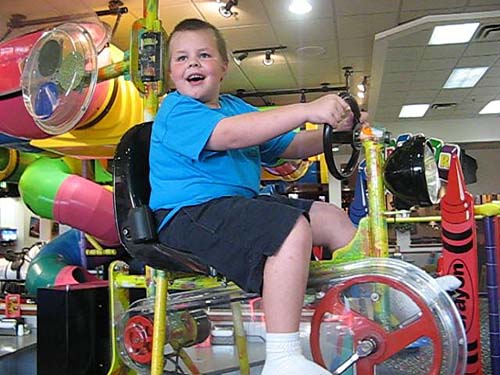
See that relaxed, smiling boy? We hadn't seen him in a while.
The program is entirely volunteer, and entirely free. That's right- free. They are serving families already overwhelmed with costs of therapy and care, therapies and interventions that medical insurance often sees as "not medically necessary" (because apparently being able to do things like speak, move, and interact are not medically necessary- what?) or "experimental" (translate= the insurance company hasn't updated their library of studies done in years, and are perfectly willing to completely ignore the progress and improvements your kid has made with an intervention) and the schools are too overwhelmed to offer. Even small accommodations can cost money. We've just had to put up a new gate to our yard because Joey figured out how to climb over the old one- that's $700 just so we can let him play in the back yard. Our house has double-key locks, we had to install them. We may have to install a security system just to keep Joey safe. We've been waitlisted for Project Lifesaver since August; we've had two major bolts since then (when he was gone for more than 20 minutes and we had to bring in others to help search for him, and he was found more than a quarter mile away) and several smaller escapes since that August incident. To get one ourselves? About $150 for a device, plus a monthly service fee. And even the best of these devices - downright cheap compared to the ones used by the police and Project Lifesaver- is a gamble for whether or not it will work properly. Compared to other families we see, we get off fairly inexpensively, too. We just do OT/social skills group and speech/language, plus these smaller interventions. We had to pay out-of-pocket for a round of vision therapy (that was AWESOME). But we're not on special diets or doing horse therapy or art therapy or music therapy or having to get a service dog. Joey doesn't have any attendants at home (except me and JoeyAndyDad and Grandma). We don't get respite care. All of those things cost money- a lot of money.
And no, there aren't huge studies to say this program makes everything all better, or any long-term improvements. But I can tell you, it makes the world a better place- even if it is just for half an hour, for one boy. A Joey-Boy.
Please help.
Thursday, May 02, 2013
Where The Air Is Filled With Sandalwood
I just finished filling out a pile of questionnaires, screening tools, and parent evals for Andy, I still find it difficult to grapple with ADHD and how it affects Andy. I think because in so many ways, our life is "normal" for us, I still have trouble understanding that my experience of parenting is so far off the beaten track. I am in India, not Italy.
We are in an odd place for out family right now. One of my jobs has taken a severe hit, and I in definite danger of losing another. On top of that, the job that has been the stopgap for some of this is ending... today. Jus gave the final exam this morning. Eep. This puts a serious damper on planning for summer and therapy schedules. My current plan is for me to eat less and cook more as a money-saving strategy (and a health strategy- I really do not need a bedtime snack. Seriously.)
At the same time, my boys keep growing, and it is time to plan for new experiences and getting them re-familiar with old favorites. We need to start thinking about colonial history when we go to Wakefield and Williamsburg. We need to explore more science a Skyline Drive and the Smithsonian. WE need to start appreciating and understanding the world around us at the next level, beyond that early recognition of novelty.
That is more difficult for my kids than for most. It takes more planning, more preparation, and more readiness.
Andy has a field trip to the zoo coming up. Hes asked me to go. If I don't get picked as a formal chaperone, I will likely drive up on my own. I will have my Zoo Bag ready and with me: extra water, fruit snacks, crackers, cheese sticks, a noisemaker, a squishy ball, paper and markers, a damp cloth, wipes, and a spare set of clothes and sunglasses. Most of my friends haven't carried a Zoo Bag with them to the zoo since their kids were infants. They often toss some wipes and a camera into their purse or pack and off they go with their nine-year-olds. THey aren't fighting a constant battle against Glassman, RockBrain, and HyperBunny. Their kids remember their underwear.
All too often, they don't understand the difference between a high-energy kid and a hyperactive one. They don't get that there is more to ADHD than just bouncing off the walls. And they aren't afraid to say it. Society gives them license to say it. Not only is my kid's special need invisible, it is openly denied to exist at all. Yay, me.
Looking down those questionnaires, the vague "often/sometimes/never" of screens and evals, knwing that each and every answer needs qualification and context, more specific information to really understand, you want to think the folks who score them will understand. I have learned otherwise- the hard way. Hard for my boys.
The good thing is it also gives me a better idea of how to help. Thee evals are reminders of skills and challenges, things that may need to be addressed and supported that we might forget are challenges for my guys. They serve as a reminder that expectations should be high, but you need to plan for success- it doesn't always come intuitively. That more often than not, we are still packing our Zoo Bag for situations other families have long taken for granted and easy. We need to be prepared to succeed. After all, India is wonderful, and beautiful, and full of life, color, and the scents of ginger and cardamom. We enjoy it as it is, as long as we don't expect it to be the Mediterranean.
We are in an odd place for out family right now. One of my jobs has taken a severe hit, and I in definite danger of losing another. On top of that, the job that has been the stopgap for some of this is ending... today. Jus gave the final exam this morning. Eep. This puts a serious damper on planning for summer and therapy schedules. My current plan is for me to eat less and cook more as a money-saving strategy (and a health strategy- I really do not need a bedtime snack. Seriously.)
At the same time, my boys keep growing, and it is time to plan for new experiences and getting them re-familiar with old favorites. We need to start thinking about colonial history when we go to Wakefield and Williamsburg. We need to explore more science a Skyline Drive and the Smithsonian. WE need to start appreciating and understanding the world around us at the next level, beyond that early recognition of novelty.
That is more difficult for my kids than for most. It takes more planning, more preparation, and more readiness.
Andy has a field trip to the zoo coming up. Hes asked me to go. If I don't get picked as a formal chaperone, I will likely drive up on my own. I will have my Zoo Bag ready and with me: extra water, fruit snacks, crackers, cheese sticks, a noisemaker, a squishy ball, paper and markers, a damp cloth, wipes, and a spare set of clothes and sunglasses. Most of my friends haven't carried a Zoo Bag with them to the zoo since their kids were infants. They often toss some wipes and a camera into their purse or pack and off they go with their nine-year-olds. THey aren't fighting a constant battle against Glassman, RockBrain, and HyperBunny. Their kids remember their underwear.
All too often, they don't understand the difference between a high-energy kid and a hyperactive one. They don't get that there is more to ADHD than just bouncing off the walls. And they aren't afraid to say it. Society gives them license to say it. Not only is my kid's special need invisible, it is openly denied to exist at all. Yay, me.
Looking down those questionnaires, the vague "often/sometimes/never" of screens and evals, knwing that each and every answer needs qualification and context, more specific information to really understand, you want to think the folks who score them will understand. I have learned otherwise- the hard way. Hard for my boys.
The good thing is it also gives me a better idea of how to help. Thee evals are reminders of skills and challenges, things that may need to be addressed and supported that we might forget are challenges for my guys. They serve as a reminder that expectations should be high, but you need to plan for success- it doesn't always come intuitively. That more often than not, we are still packing our Zoo Bag for situations other families have long taken for granted and easy. We need to be prepared to succeed. After all, India is wonderful, and beautiful, and full of life, color, and the scents of ginger and cardamom. We enjoy it as it is, as long as we don't expect it to be the Mediterranean.
Wednesday, April 17, 2013
Autism Understanding: Yet Another Day
Brother to Brother
Hand in hand
They wend down to the water
Across the sand.
I don't think there have ever been two brothers more loving of each other than Joey and Andy. There may, in this world, be equals, but none greater. It simply would be impossible.
I won't say they get along all the time. Their abilities, their challenges, their personalities, their differences preclude complete harmony at all levels and all times. Like anyone else in constant close quarters with huge amounts of trust between them, they bicker and fight and let it all out. But it doesn't cleave between them. They are brother to brother, always.
Even when they were very little, there was that understanding between them. Joey didn't let kids pick on Andy; he protected his brother, hugged on him, loved him. And Andy didn't let people exclude Joey. He stopped and explained the game, let Joey catch up and catch on. Andy is more of a dynamic player now, with less patience to wait for Joey to join in and catch on; but then, he's 8, not 18. And he almost always invites Joey to play- periodically, throughout the time at the park or wherever.
They were both out of sorts at soccer yesterday, no doubt about it. Andy was brittle, to the point the coach came over and asked for my advice (and he's ADHD, too, so he has some grasp on how to deal with ADHD kids). Joey was bored and tired and hungry. I knew I had a brewing disaster on my hands, and had called in the cavalry, but it was 20 minutes away.
Andy was scowling, kicking a ball back and forth across the field while the other kids were doing some exercises that involved jumping over the ball alot. It was an exercise he was not very good at, and that frustrated him all the more. It was time for intervention to bring Andy to a better place so he could participate. I moved to intercept him, and he turned midfield and started away from me. I waited. He turned to come back across the field in his pattern, looked up, and with a grumpy frown, pointed and grunted. A flick of my eyes to the bench where Joey had been, now empty, told me the issue. Now Andy made a louder noise, no words yet, but with more distress in his face.
"I can't go deal with him until you stop this unexpected behavior and do what you are expected to be doing," I explained calmly, but firmly. I knew Joey was headed to the bridge that went to another set of playfields, but there was a set path; I would be able to catch him without much difficulty. Andy, however, did not know the path beyond that bridge- and he took off at a run to catch his brother. Grumpy, tired, and irritable as he was, to him, Joey was in danger.
At least they'll now be moving in the same direction, was my initial, very tired and irritable, thought as I trotted after him. I didn't put on speed because I wanted Andy to catch Joey first. It was important that Andy, once alarmed, was able to feel like he did something. I learned that a while back. He needed to be part of helping Joey when Joey was distressed. It actually helps him to do something that seems useful, instead of having to cower in his room during a meltdown or stand in panicked indecision during a bolt.
And two minutes later, they came back across the bridge, hand-in-hand. I could hear them talking to each other about expected and unexpected behavior. Andy was upbraiding Joey for his "unexpected running." Joey was telling Andy he was "expected to be playing soccer now."
Andy went back to his team. Joey came back to the bench. And the world righted itself for a few precious minutes.

Hand in hand
They wend down to the water
Across the sand.
I don't think there have ever been two brothers more loving of each other than Joey and Andy. There may, in this world, be equals, but none greater. It simply would be impossible.
I won't say they get along all the time. Their abilities, their challenges, their personalities, their differences preclude complete harmony at all levels and all times. Like anyone else in constant close quarters with huge amounts of trust between them, they bicker and fight and let it all out. But it doesn't cleave between them. They are brother to brother, always.
Even when they were very little, there was that understanding between them. Joey didn't let kids pick on Andy; he protected his brother, hugged on him, loved him. And Andy didn't let people exclude Joey. He stopped and explained the game, let Joey catch up and catch on. Andy is more of a dynamic player now, with less patience to wait for Joey to join in and catch on; but then, he's 8, not 18. And he almost always invites Joey to play- periodically, throughout the time at the park or wherever.
They were both out of sorts at soccer yesterday, no doubt about it. Andy was brittle, to the point the coach came over and asked for my advice (and he's ADHD, too, so he has some grasp on how to deal with ADHD kids). Joey was bored and tired and hungry. I knew I had a brewing disaster on my hands, and had called in the cavalry, but it was 20 minutes away.
Andy was scowling, kicking a ball back and forth across the field while the other kids were doing some exercises that involved jumping over the ball alot. It was an exercise he was not very good at, and that frustrated him all the more. It was time for intervention to bring Andy to a better place so he could participate. I moved to intercept him, and he turned midfield and started away from me. I waited. He turned to come back across the field in his pattern, looked up, and with a grumpy frown, pointed and grunted. A flick of my eyes to the bench where Joey had been, now empty, told me the issue. Now Andy made a louder noise, no words yet, but with more distress in his face.
"I can't go deal with him until you stop this unexpected behavior and do what you are expected to be doing," I explained calmly, but firmly. I knew Joey was headed to the bridge that went to another set of playfields, but there was a set path; I would be able to catch him without much difficulty. Andy, however, did not know the path beyond that bridge- and he took off at a run to catch his brother. Grumpy, tired, and irritable as he was, to him, Joey was in danger.
At least they'll now be moving in the same direction, was my initial, very tired and irritable, thought as I trotted after him. I didn't put on speed because I wanted Andy to catch Joey first. It was important that Andy, once alarmed, was able to feel like he did something. I learned that a while back. He needed to be part of helping Joey when Joey was distressed. It actually helps him to do something that seems useful, instead of having to cower in his room during a meltdown or stand in panicked indecision during a bolt.
And two minutes later, they came back across the bridge, hand-in-hand. I could hear them talking to each other about expected and unexpected behavior. Andy was upbraiding Joey for his "unexpected running." Joey was telling Andy he was "expected to be playing soccer now."
Andy went back to his team. Joey came back to the bench. And the world righted itself for a few precious minutes.

Sunday, April 14, 2013
Autism Understanding: Day 12
Baseball park
Joey jumps in
Sound of laughter
There's nothing quite like watching Joey on the baseball field. When we first started Challenger's Baseball, Joey knew nothing about baseball. He didn't know how to hold a bat, what a base was, or even how to run- at 6 years old, he was still using a toddler trot. He took to it like a fish in water. There were high school baseball players out helping, people cheering, and holy cow, it's fun! Joey lights up on game day. His running and movement improves drastically between the beginning and end of the season (unfortunately, he often doesn't retain that progress out of season). He thanks the "big players" for helping.
Our local program has expanded to 8 teams, so the smaller and older players are now separated. Joey moved up to the Big Kids teams this past fall. Unfortunately, his best baseball friend is a year behind him, and so no longer on his team. He got to see her Opening Day. He was overheard telling her, "There is nothing more important than our friendship!"
This summer, I am going to again attempt a little program to help Joey connect with friends and think about them, even when they are not immediately present- through letter-writing. I thought I might even set up an email account for him, so he can start thinking about how to use it and learn the rules of email use and etiquette. Joey is so social, and loves to be around people so much, I am hoping it will make him happy to continue to feel connected to people, even when they are not right in front of him. I thought a bulletin board with photos of his friends might even be a good visual cue for him.
I'll keep you posted. And maybe, just maybe, Joey will, too.
Joey jumps in
Sound of laughter
There's nothing quite like watching Joey on the baseball field. When we first started Challenger's Baseball, Joey knew nothing about baseball. He didn't know how to hold a bat, what a base was, or even how to run- at 6 years old, he was still using a toddler trot. He took to it like a fish in water. There were high school baseball players out helping, people cheering, and holy cow, it's fun! Joey lights up on game day. His running and movement improves drastically between the beginning and end of the season (unfortunately, he often doesn't retain that progress out of season). He thanks the "big players" for helping.
Our local program has expanded to 8 teams, so the smaller and older players are now separated. Joey moved up to the Big Kids teams this past fall. Unfortunately, his best baseball friend is a year behind him, and so no longer on his team. He got to see her Opening Day. He was overheard telling her, "There is nothing more important than our friendship!"
This summer, I am going to again attempt a little program to help Joey connect with friends and think about them, even when they are not immediately present- through letter-writing. I thought I might even set up an email account for him, so he can start thinking about how to use it and learn the rules of email use and etiquette. Joey is so social, and loves to be around people so much, I am hoping it will make him happy to continue to feel connected to people, even when they are not right in front of him. I thought a bulletin board with photos of his friends might even be a good visual cue for him.
I'll keep you posted. And maybe, just maybe, Joey will, too.
Saturday, April 13, 2013
Autism Understanding: Day 11
Screaming, he bolts out
Ugly words strike at my soul
I have failed the test.
I stand at the gate, watching, waiting. I know this is a waiting game. A hard, ugly, heart-wrenching waiting game. He's safe. Well, physically. Technically, that means he's not likely to break a bone or disappear into thin air. I wait.
My nerves are the fresh ones, I spent the morning at Andy's soccer game. He's already taken a runner on JoeyAndyDad twice this morning, at baseball. There wasn't a game, just a ceremony. Anxiety has completely overwhelmed him. Its not easy for Joey to stand, doing basically nothing, for two hours. Baseball opening day should be fun. For Joey, it isn't.
I'm the one who can stand at the gate, and wait.
Joey comes over to me, but he's still babbling, being a movie character. I keep my voice calm, the tone low and quiet. He can speak with me when he is ready to be Joey again, but not before. I am not participating in this particular script. I know it will only make him more agitated if I do.
The immediate trigger was something simple. It was beside the point, really. So many days, I'm the one ready to break into tears, wishing, praying, hoping that just this once, please just this once, be able to hold on and do what I asked of you. Please, please, don't be the day you can't do this. Please. And all the while knowing, realizing with horrible fear, pain, confusion, he can't do it today. He responds to the overload with apparent defiance. I know what it looks like is defiance, anger, disobedience, when what I need is compliance. The reality is it is a meltdown, his attempts to regain control of something, anything, and I am the parent, the thing he can cling to, lash out and try to control. He is telling me he can't do this.
The echolalia and echopraxia only go to prove the situation. He can't do this right now. He's overwhelmed. I have to wait.
He starts to calm down, runs into the house. I follow. He has calmed enough to find a more calming activity and engage. I toy with the thought, am I reinforcing disobedience? I know I am not through waiting. I do some small but needful tasks, and wait, watching his face, listening for his voice to change, his language to change. I wait to be able to talk with him, to try to come to understanding.
And today this is my job; and some days, it is JoeyAndyDad's job. Whomever has the freshest nerves, whenever possible. Waiting is hard.
Ugly words strike at my soul
I have failed the test.
I stand at the gate, watching, waiting. I know this is a waiting game. A hard, ugly, heart-wrenching waiting game. He's safe. Well, physically. Technically, that means he's not likely to break a bone or disappear into thin air. I wait.
My nerves are the fresh ones, I spent the morning at Andy's soccer game. He's already taken a runner on JoeyAndyDad twice this morning, at baseball. There wasn't a game, just a ceremony. Anxiety has completely overwhelmed him. Its not easy for Joey to stand, doing basically nothing, for two hours. Baseball opening day should be fun. For Joey, it isn't.
I'm the one who can stand at the gate, and wait.
Joey comes over to me, but he's still babbling, being a movie character. I keep my voice calm, the tone low and quiet. He can speak with me when he is ready to be Joey again, but not before. I am not participating in this particular script. I know it will only make him more agitated if I do.
The immediate trigger was something simple. It was beside the point, really. So many days, I'm the one ready to break into tears, wishing, praying, hoping that just this once, please just this once, be able to hold on and do what I asked of you. Please, please, don't be the day you can't do this. Please. And all the while knowing, realizing with horrible fear, pain, confusion, he can't do it today. He responds to the overload with apparent defiance. I know what it looks like is defiance, anger, disobedience, when what I need is compliance. The reality is it is a meltdown, his attempts to regain control of something, anything, and I am the parent, the thing he can cling to, lash out and try to control. He is telling me he can't do this.
The echolalia and echopraxia only go to prove the situation. He can't do this right now. He's overwhelmed. I have to wait.
He starts to calm down, runs into the house. I follow. He has calmed enough to find a more calming activity and engage. I toy with the thought, am I reinforcing disobedience? I know I am not through waiting. I do some small but needful tasks, and wait, watching his face, listening for his voice to change, his language to change. I wait to be able to talk with him, to try to come to understanding.
And today this is my job; and some days, it is JoeyAndyDad's job. Whomever has the freshest nerves, whenever possible. Waiting is hard.
Friday, April 12, 2013
Autism Understanding: Day 10
He leaps onto the table
"Mama Mia!" Dare they claim
No imagination?
Whenever I hear someone begin with, "people with autism..." to describe any one person with autism, I tend to cringe. A lot of lip service is given to the uniqueness of people, include autistic people. However, the power of over-generalization still reigns in society, and all too often an individual is overlooked and even disregarded, in favor of pigeon-holing categorization and labeling. Such is the danger of labels.
When Joey was very young, and we first took him down to Kluge, one of the most striking of comments made by Dr. Blackman at the time was to the effect of, Joey displays all the classic signs of autism- but not in a classic combination. At the time, it was striking because we found ourselves having difficulty understanding what it meant, because we were newbies to the road of discovering what it meant that Joey is autistic. The better we know Joey, the more the comment makes sense. It also explains some of the problems we have getting others to understand him.
We have been told Joey is "too social" to be autistic. We have learned this is rooted in ignorance of autistic people generally, and why they may- or may not- avoid or have issues with social interaction.
We have been told Joey is "too verbal" and should have his diagnosis changed to Asperger's Syndrome. This is rooted in ignorance of autism and the specifics of Asperger's Syndrome, as well as the work Joey has put in to learning to speak and use language. It also ignores the amount of energy and processing it takes for Joey to use language. It is the first skill that plummets whenever he gets angry or upset. Besides, we started this path with a non-verbal child. We are totally sold on the merits of early intervention.
We have been told that autistic people don't lie. This is a laugh, rooted in the problems autistic people often have with processing language or using language as a tool for expression. Joey does have trouble with some kinds of visualization, certainly has issues with language and idioms, and often has trouble with his "filters" (both receptive and expressive). He is, however, quite capable of lying, and understands the concept of both the "white lie" and the blatant falsehood. He knows that if he breaks a rule, lying is one way to try to get out of consequences- and sometimes it is a highly successful tactic (especially with folks who think autistic people can't lie).
We have been told Joey is too intelligent to be autistic. This is jut plain ignorant.
We have been told Joey is not smart enough to be autistic. Setting aside the basic ignorance this reveals of Joey's intelligence or person, not every autistic person is a savant. As far as we know, Joey is not a savant. I refrain from setting out complete and total judgement until we see how he grows up. We are still learning about Joey and his talents- as is Joey.
We have been told Joey is too heavy to be autistic. He is too well-behaved. He has too much eye contact. He has too much joint attention. He has too much or too little or too soon or too late.
It is all rooted in ignorance and blindness, and the devaluing of the individual. It is born of wanting to sweep people under a label and not have to worry about thinking about them anymore. It results in reluctance to provide support and service, to welcome him into his community, or to even get to know him. It is a dismissive attitude that often plays out in rudeness on the playground, people who make faces and comments and even actively bully. Ignorance is the root of fear.
Joey is Joey. And he is awesome.
I am lucky to get to know him so well. I love being his mom.
"Mama Mia!" Dare they claim
No imagination?
Whenever I hear someone begin with, "people with autism..." to describe any one person with autism, I tend to cringe. A lot of lip service is given to the uniqueness of people, include autistic people. However, the power of over-generalization still reigns in society, and all too often an individual is overlooked and even disregarded, in favor of pigeon-holing categorization and labeling. Such is the danger of labels.
When Joey was very young, and we first took him down to Kluge, one of the most striking of comments made by Dr. Blackman at the time was to the effect of, Joey displays all the classic signs of autism- but not in a classic combination. At the time, it was striking because we found ourselves having difficulty understanding what it meant, because we were newbies to the road of discovering what it meant that Joey is autistic. The better we know Joey, the more the comment makes sense. It also explains some of the problems we have getting others to understand him.
We have been told Joey is "too social" to be autistic. We have learned this is rooted in ignorance of autistic people generally, and why they may- or may not- avoid or have issues with social interaction.
We have been told Joey is "too verbal" and should have his diagnosis changed to Asperger's Syndrome. This is rooted in ignorance of autism and the specifics of Asperger's Syndrome, as well as the work Joey has put in to learning to speak and use language. It also ignores the amount of energy and processing it takes for Joey to use language. It is the first skill that plummets whenever he gets angry or upset. Besides, we started this path with a non-verbal child. We are totally sold on the merits of early intervention.
We have been told that autistic people don't lie. This is a laugh, rooted in the problems autistic people often have with processing language or using language as a tool for expression. Joey does have trouble with some kinds of visualization, certainly has issues with language and idioms, and often has trouble with his "filters" (both receptive and expressive). He is, however, quite capable of lying, and understands the concept of both the "white lie" and the blatant falsehood. He knows that if he breaks a rule, lying is one way to try to get out of consequences- and sometimes it is a highly successful tactic (especially with folks who think autistic people can't lie).
We have been told Joey is too intelligent to be autistic. This is jut plain ignorant.
We have been told Joey is not smart enough to be autistic. Setting aside the basic ignorance this reveals of Joey's intelligence or person, not every autistic person is a savant. As far as we know, Joey is not a savant. I refrain from setting out complete and total judgement until we see how he grows up. We are still learning about Joey and his talents- as is Joey.
We have been told Joey is too heavy to be autistic. He is too well-behaved. He has too much eye contact. He has too much joint attention. He has too much or too little or too soon or too late.
It is all rooted in ignorance and blindness, and the devaluing of the individual. It is born of wanting to sweep people under a label and not have to worry about thinking about them anymore. It results in reluctance to provide support and service, to welcome him into his community, or to even get to know him. It is a dismissive attitude that often plays out in rudeness on the playground, people who make faces and comments and even actively bully. Ignorance is the root of fear.
Joey is Joey. And he is awesome.
I am lucky to get to know him so well. I love being his mom.
Wednesday, April 10, 2013
Autism Understanding: Day 9
Happy Birthday Boy
We love you more than words tell
Let us try kisses!

Happy Birthday, Joey-Boy. You totally rock.
We love you more than words tell
Let us try kisses!

Happy Birthday, Joey-Boy. You totally rock.
Tuesday, April 09, 2013
Autism Understanding: Day 8
Forehead to forehead
I am lost in the blue depths
"I love you, Mommy."
Joey turns eleven tomorrow.
No child develops the same as any other, nor consistently in all areas at a given rate. Sometimes when I think of growing, I can still hear Mr. Rogers singing "Everything grows together... because you're all one piece..." But that doesn't mean you develop all the same, at the same rate. In some ways, Joey is 15. In some ways, he's still 5. But in all ways, he's all Joey, just the way he is.
It is shame we live in a world that can't just accept people as they are, as they develop, in their wonderful uniqueness. We do a lot of lip service to the idea, and there's lots of kids' shows that address the idea (some well, some not so much); but in the end, as we grow up, we move away from valuing people as they are, and towards a sort of dark prejudice and fear of people who differ from us. People who are, in some way, unexpected. New. Unknown.
Middle school is the vortex of this change, from "we're all in this together" to "exclusive secret club". Yes, it starts early- kids are quick studies of their parents, neighbors, family, and friends, after all. But the real abyss yawns at that moment when we feel that transition begin, from a child to an adult, and we try to make our own space in the world, construct our identity as something separate from the world of our parents and families.
It is well known that Middle School is Social Hell.
As we stand upon its brink, we know that we start at a beginning- a moment when balances must all be correct, lest we slip from the edge and into the dark. Will my guidance and example be enough to see my child through the maelstrom? Or will he be lost in the tempest, emerging as a stranger I hardly know? And if he emerges a stranger, who will that stranger be? Being unexpected, as we know from our social skills group, is not always bad. It is just not expected. Different from the expected.
I could return to the rant about needing social skills groups to help this whole age group navigate the storm, but that is not my point.
My point is that Joey is not ready.
We have spent the last three years treading water in a majority of skills other kids just "pick up", but Joey has to be specifically taught. Not that there has been no development of skills; but the pace is such that instead of moving forward towards being able to keep pace with his peers, he falls more and more behind. He may be the king of long division, but how many kids want to talk about it all afternoon?
Joey is dealing with growing frustration in trying to connect with people around him. He loves people. He likes to talk with them, be with them, play with them. However, his attempts to generalize conversation skills has been... not quite successful. If he gets the words right, they still sound canned, and the script only takes him so far. If he deviates from the script, his topics and words are so unexpected, the other person often has no point of reference to use to respond. If someone came up to you and, smiling broadly, announced, "Slay means to kill! Or to amuse immensely! Immense means really big!" what would you do? For most people, you would hesitate, trying to process what just happened and determine a way to respond. Some people smile while hesitating. Others frown. Other get this deer-in-headlights look. No matter what, Joey knows what that hesitation means. He feels it. He has been "unexpected." Weird. Different.
He is becoming aware, via his classmates, that being different is becoming problematic. He is entering upon a world where Different is Bad.
And that is a lesson that I want to counter. Because you know what? Different is not bad. Unexpected is surprising, and surprise can be fun. It gives you a new perspective. A new take on the world around you. Something new to think about... if you allow yourself to accept it, think about it, enjoy it. When you separate "bad" and "unexpected", you might end up at a surprise party.
With cake.
Joey turns eleven tomorrow. And that part of him that is still five- it wants chocolate cake.
The part of me that is still five wants some, too.
I am lost in the blue depths
"I love you, Mommy."
Joey turns eleven tomorrow.
No child develops the same as any other, nor consistently in all areas at a given rate. Sometimes when I think of growing, I can still hear Mr. Rogers singing "Everything grows together... because you're all one piece..." But that doesn't mean you develop all the same, at the same rate. In some ways, Joey is 15. In some ways, he's still 5. But in all ways, he's all Joey, just the way he is.
It is shame we live in a world that can't just accept people as they are, as they develop, in their wonderful uniqueness. We do a lot of lip service to the idea, and there's lots of kids' shows that address the idea (some well, some not so much); but in the end, as we grow up, we move away from valuing people as they are, and towards a sort of dark prejudice and fear of people who differ from us. People who are, in some way, unexpected. New. Unknown.
Middle school is the vortex of this change, from "we're all in this together" to "exclusive secret club". Yes, it starts early- kids are quick studies of their parents, neighbors, family, and friends, after all. But the real abyss yawns at that moment when we feel that transition begin, from a child to an adult, and we try to make our own space in the world, construct our identity as something separate from the world of our parents and families.
It is well known that Middle School is Social Hell.
As we stand upon its brink, we know that we start at a beginning- a moment when balances must all be correct, lest we slip from the edge and into the dark. Will my guidance and example be enough to see my child through the maelstrom? Or will he be lost in the tempest, emerging as a stranger I hardly know? And if he emerges a stranger, who will that stranger be? Being unexpected, as we know from our social skills group, is not always bad. It is just not expected. Different from the expected.
I could return to the rant about needing social skills groups to help this whole age group navigate the storm, but that is not my point.
My point is that Joey is not ready.
We have spent the last three years treading water in a majority of skills other kids just "pick up", but Joey has to be specifically taught. Not that there has been no development of skills; but the pace is such that instead of moving forward towards being able to keep pace with his peers, he falls more and more behind. He may be the king of long division, but how many kids want to talk about it all afternoon?
Joey is dealing with growing frustration in trying to connect with people around him. He loves people. He likes to talk with them, be with them, play with them. However, his attempts to generalize conversation skills has been... not quite successful. If he gets the words right, they still sound canned, and the script only takes him so far. If he deviates from the script, his topics and words are so unexpected, the other person often has no point of reference to use to respond. If someone came up to you and, smiling broadly, announced, "Slay means to kill! Or to amuse immensely! Immense means really big!" what would you do? For most people, you would hesitate, trying to process what just happened and determine a way to respond. Some people smile while hesitating. Others frown. Other get this deer-in-headlights look. No matter what, Joey knows what that hesitation means. He feels it. He has been "unexpected." Weird. Different.
He is becoming aware, via his classmates, that being different is becoming problematic. He is entering upon a world where Different is Bad.
And that is a lesson that I want to counter. Because you know what? Different is not bad. Unexpected is surprising, and surprise can be fun. It gives you a new perspective. A new take on the world around you. Something new to think about... if you allow yourself to accept it, think about it, enjoy it. When you separate "bad" and "unexpected", you might end up at a surprise party.
With cake.
Joey turns eleven tomorrow. And that part of him that is still five- it wants chocolate cake.
The part of me that is still five wants some, too.
Monday, April 08, 2013
Autism Understanding: Day 7
Taking a walk, "Mommy!
Daffodils! Hyacinths! See
the birds flying home!"
When you have a bumper sticker on the back of your car saying, "Yes! You can ask me about autism!", people tend to ask you about their kid. Especially their little, little kid who is not quite in preschool, but Momma is worried that something may be up, and could I please watch him a minute and say what I think?
I remember needing that reassurance, that connection, that validation when Joey was little, and we were first told he might have autism. That scary edge of "OMYGODIHAVENOIDEAWHATTODOIFSOMETHINGISWRONGHELPHELPHELPHELP!!!!!" It is even harder to be on that edge when ignorant people are all around you saying, "There's nothing wrong with that kid! All these diagnoses are a crock! Just wait a little longer/quit spoiling him/smack him." You realize a huge gulf just opened at your feet, dividing you and your special needs child from most of society, which is intensely ignorant of special needs- even when their sibling/cousin/neighbor/extended family member has special needs.
The first thing I do when presented with this panicked situation is to calmly say sure, I'll be happy to meet your child. After all, who doesn't want to meet an awesome kid? Second, I remind the parent that I am NOT a medical professional, and if they are concerned, they should absolutely have their kid screened. Screening is almost painless, usually quick, and can be really helpful when done by a good professional.
Then I watch, and ask some questions. These parents want to be asked questions. They want to talk about their kid. They want something, some information or support or guidance. Some of them even have ready answers to some of the regular questions, about common milestones (does she talk? does she wave? does he line up his toys?) or general info questions (why are you concerned? did you notice something different? Do they seem different when around other kids?) But my big, star screening questions is, "Do they point?"
One of the common threads I find with the autistic kids I know is trouble with (not complete absence of) joint attention. There may be a variety of reasons for this issue, but generally, it is shown when they are very young by kids not pointing to things- things they want, things they notice, things they want other people to see. Joey still is limited in his ability to actually point at something. He has found other ways to draw your attention to something, but pointing is not his best. His finger flicks, instead of creating that line-of-sight between the fingertip and the object. He also does not follow other people's pointing very well. He cannot make that connection in space between the finger and the item.
This issue gives rise to a lot of the "in their own little world" myths about autistic children. Not knowing how to show you something, or how to see something you want to show them, is not necessarily a disinterest in showing; it is a problem of communicating. The disjoint can be so severe and frustrating that the person learns to avoid joint attention, or even shun it. After all, if you were told every day, day in and day out, that you were bad at something- not necessarily in a straightforward manner, but in a myriad of hints and signals- you might give up on doing it, too. Go with something you are better at, something less frustrating and more constructive for you. Try to find other ways to survive.
This is, once again, an instance of measuring a fish by how well it climbs a tree. Sometimes you have to take the time to get in the water and swim, if you want to get to know a fish. You may never grow gills and have to come up for air, but you'll see the real beauty of the strength to slip through water with teh flick of a fin.
Daffodils! Hyacinths! See
the birds flying home!"
When you have a bumper sticker on the back of your car saying, "Yes! You can ask me about autism!", people tend to ask you about their kid. Especially their little, little kid who is not quite in preschool, but Momma is worried that something may be up, and could I please watch him a minute and say what I think?
I remember needing that reassurance, that connection, that validation when Joey was little, and we were first told he might have autism. That scary edge of "OMYGODIHAVENOIDEAWHATTODOIFSOMETHINGISWRONGHELPHELPHELPHELP!!!!!" It is even harder to be on that edge when ignorant people are all around you saying, "There's nothing wrong with that kid! All these diagnoses are a crock! Just wait a little longer/quit spoiling him/smack him." You realize a huge gulf just opened at your feet, dividing you and your special needs child from most of society, which is intensely ignorant of special needs- even when their sibling/cousin/neighbor/extended family member has special needs.
The first thing I do when presented with this panicked situation is to calmly say sure, I'll be happy to meet your child. After all, who doesn't want to meet an awesome kid? Second, I remind the parent that I am NOT a medical professional, and if they are concerned, they should absolutely have their kid screened. Screening is almost painless, usually quick, and can be really helpful when done by a good professional.
Then I watch, and ask some questions. These parents want to be asked questions. They want to talk about their kid. They want something, some information or support or guidance. Some of them even have ready answers to some of the regular questions, about common milestones (does she talk? does she wave? does he line up his toys?) or general info questions (why are you concerned? did you notice something different? Do they seem different when around other kids?) But my big, star screening questions is, "Do they point?"
One of the common threads I find with the autistic kids I know is trouble with (not complete absence of) joint attention. There may be a variety of reasons for this issue, but generally, it is shown when they are very young by kids not pointing to things- things they want, things they notice, things they want other people to see. Joey still is limited in his ability to actually point at something. He has found other ways to draw your attention to something, but pointing is not his best. His finger flicks, instead of creating that line-of-sight between the fingertip and the object. He also does not follow other people's pointing very well. He cannot make that connection in space between the finger and the item.
This issue gives rise to a lot of the "in their own little world" myths about autistic children. Not knowing how to show you something, or how to see something you want to show them, is not necessarily a disinterest in showing; it is a problem of communicating. The disjoint can be so severe and frustrating that the person learns to avoid joint attention, or even shun it. After all, if you were told every day, day in and day out, that you were bad at something- not necessarily in a straightforward manner, but in a myriad of hints and signals- you might give up on doing it, too. Go with something you are better at, something less frustrating and more constructive for you. Try to find other ways to survive.
This is, once again, an instance of measuring a fish by how well it climbs a tree. Sometimes you have to take the time to get in the water and swim, if you want to get to know a fish. You may never grow gills and have to come up for air, but you'll see the real beauty of the strength to slip through water with teh flick of a fin.
Sunday, April 07, 2013
Autism Understanding: Day 6
He gives me a smile
A picture-perfect giggle
Twinkling eyes bright.
What does autism look like?


When people say, "but he looks like a NORMAL KID!!!" all I can say is, "That's because he is a NORMAL KID!!!" Just an autistic one!
A picture-perfect giggle
Twinkling eyes bright.
What does autism look like?




When people say, "but he looks like a NORMAL KID!!!" all I can say is, "That's because he is a NORMAL KID!!!" Just an autistic one!
Friday, April 05, 2013
Autism Understanding: Day 5
Conversation tried
And tried and tried and tried and
Why do they walk away?
I think social thinking and social skills should be incorporated into the general curriculum of every school, at every level. I think even college students need to be required to take social skills classes and training. If people really gained these skills, really got a chance to think them out and practice them before being tossed out there to flounder, the world would just be a better place, all-around.
Anti-bullying programs are a joke. They don't work. Kids seem to regard them as some sort of irritating adult thing, like South Park's Sexual Harassment Panda. In the abstract, people know you don't beat on other people and make fun of them. On the ground, the lines are apparently not so clear. The idea of treating others the way we want to be treated just completely goes over most people's heads. That other people have feelings to hurt, that it might be a bad idea to insult people even when they are not standing in front of you, that being included means being inclusive- these things are apparently harder to learn than they appear.
Besides that, kids who are already serious bullies don't care about anti-bullying programs. They aren't the ones really being targeted. They need a whole different kind of support- someone needs to take them aside and figure out the root of the problem, and address it. Now. Denying that bullying exists in your school, and that no one knows who the bullies are, suggests you might need that kind of intervention yourself. Turning a blind eye is a type of abuse that absolutely requires intervention.
The over-use of the term "bully" isn't helping, either. Is turning a blind eye "a form of bullying"? Perhaps. But let's call it something with more specific implications: abuse. It may seem a passive thing, but really, anyone who has ever worked with people on any level knows that bullying- the direct pressuring of one person trying to exert power over another- happens, and you have to watch for it. If you teach kids (and I mean really teach them, not just note it and move on) early what the pitfalls are that result in bullying, they can at least watch for the traps. When you teach others not only how to act social, but to actually think about social interaction, to think about the other person as well as being self-aware- that gives people the tools to not only avoid the pitfalls, but know what to do if they fall in to one, before it becomes a serious situation.
All too often, people on the spectrum are criticized for "lacking social skills." If we actually thought about social skills and were socially aware and socially thinking, we might realize that it isn't just "an autism thing." Today, I watched Joey in the park. Joey loves babies and little kids, and he wandered about much of the time, trying to interact with families and small kids, play with the babies and get involved with the little ones. No, he's not good at opening interactions, but that's no excuse to hurt his feelings- especially if you an adult, since he is so clearly a child. I could tell you a lot about each and every adult out there in about five seconds, watching their faces as Joey walked up to them and tried to open conversation. And tried. And tried again.
Some of the adults smiled and joined in. Some of them wrinkled their noses and ignored him. A couple families actually picked up their kids and walked away, only to return when he had moved to another part of the park. A group of college kids actually remarked, sitting right next to me, "Someone ought to take that retarded kid home. He's making everybody uncomfortable." You can imagine their faces when Joey came over to me, and we did some signing and playing together, then I gave him a kiss before he returned to his attempts at play. I didn't look. The few seconds of silence before they wandered away was deafening.
This is what passes as social skills?
Imagine how different middle school would be for everyone if social thinking was part and parcel of the curriculum. If kids on the brink of huge social changes and questioning were given the tools to be both self-aware and to understand how their own actions and feelings might affect others, they might have the tools to navigate the social world they are creating. They might understand the real value of diversity, and find the challenge of inclusion far less daunting. With safe, controlled situations to practice in, kids might find going out and making realities a familiar thing, and do it with real confidence and strength in experience, instead of trying to strike out with no idea how to do it.
It's amazing how much easier it is to do something when you have an instruction manual and can practice a bit before going out and doing it "for reals." We know we need to practice skills to get them right. Why do we think we can just go out and use social skills without practice?
And tried and tried and tried and
Why do they walk away?
I think social thinking and social skills should be incorporated into the general curriculum of every school, at every level. I think even college students need to be required to take social skills classes and training. If people really gained these skills, really got a chance to think them out and practice them before being tossed out there to flounder, the world would just be a better place, all-around.
Anti-bullying programs are a joke. They don't work. Kids seem to regard them as some sort of irritating adult thing, like South Park's Sexual Harassment Panda. In the abstract, people know you don't beat on other people and make fun of them. On the ground, the lines are apparently not so clear. The idea of treating others the way we want to be treated just completely goes over most people's heads. That other people have feelings to hurt, that it might be a bad idea to insult people even when they are not standing in front of you, that being included means being inclusive- these things are apparently harder to learn than they appear.
Besides that, kids who are already serious bullies don't care about anti-bullying programs. They aren't the ones really being targeted. They need a whole different kind of support- someone needs to take them aside and figure out the root of the problem, and address it. Now. Denying that bullying exists in your school, and that no one knows who the bullies are, suggests you might need that kind of intervention yourself. Turning a blind eye is a type of abuse that absolutely requires intervention.
The over-use of the term "bully" isn't helping, either. Is turning a blind eye "a form of bullying"? Perhaps. But let's call it something with more specific implications: abuse. It may seem a passive thing, but really, anyone who has ever worked with people on any level knows that bullying- the direct pressuring of one person trying to exert power over another- happens, and you have to watch for it. If you teach kids (and I mean really teach them, not just note it and move on) early what the pitfalls are that result in bullying, they can at least watch for the traps. When you teach others not only how to act social, but to actually think about social interaction, to think about the other person as well as being self-aware- that gives people the tools to not only avoid the pitfalls, but know what to do if they fall in to one, before it becomes a serious situation.
All too often, people on the spectrum are criticized for "lacking social skills." If we actually thought about social skills and were socially aware and socially thinking, we might realize that it isn't just "an autism thing." Today, I watched Joey in the park. Joey loves babies and little kids, and he wandered about much of the time, trying to interact with families and small kids, play with the babies and get involved with the little ones. No, he's not good at opening interactions, but that's no excuse to hurt his feelings- especially if you an adult, since he is so clearly a child. I could tell you a lot about each and every adult out there in about five seconds, watching their faces as Joey walked up to them and tried to open conversation. And tried. And tried again.
Some of the adults smiled and joined in. Some of them wrinkled their noses and ignored him. A couple families actually picked up their kids and walked away, only to return when he had moved to another part of the park. A group of college kids actually remarked, sitting right next to me, "Someone ought to take that retarded kid home. He's making everybody uncomfortable." You can imagine their faces when Joey came over to me, and we did some signing and playing together, then I gave him a kiss before he returned to his attempts at play. I didn't look. The few seconds of silence before they wandered away was deafening.
This is what passes as social skills?
Imagine how different middle school would be for everyone if social thinking was part and parcel of the curriculum. If kids on the brink of huge social changes and questioning were given the tools to be both self-aware and to understand how their own actions and feelings might affect others, they might have the tools to navigate the social world they are creating. They might understand the real value of diversity, and find the challenge of inclusion far less daunting. With safe, controlled situations to practice in, kids might find going out and making realities a familiar thing, and do it with real confidence and strength in experience, instead of trying to strike out with no idea how to do it.
It's amazing how much easier it is to do something when you have an instruction manual and can practice a bit before going out and doing it "for reals." We know we need to practice skills to get them right. Why do we think we can just go out and use social skills without practice?
Thursday, April 04, 2013
Autism Understanding: Day 4
If you sit silent
You can almost hear him think
The world swirls through him.
Joey has discovered our back yard. This is a very exciting thing. He has taken to getting up whenever he feels like it, putting on his shoes, and acting out his favorite games and movies outside. Sometimes he even adds to them, pretending to be the characters, acting out what they might do or say or think. Joey is very good at imitating voices. He is an amazing Mr. Waternoose.
What I especially like is the getting up and moving part. Moving really helps Joey's brain make connections and think things out. I am convinced that much of the bolting behavior we see is actually Joey trying to get away to take a walk, to process what is happening around him and to him; to escape the immediate melee and make sense of it. Figuring out that he can get up and do this at home is, I believe, a huge step forward for him.
I also like that he "gets" the rule that he is to stay in the back yard. We are constantly having to put up doors and locks and obstacles, lest his frustration overwhelm him and he bolts. It feels like we are building a prison around him; I'm betting he feels it, too. Joey doesn't have firm enough control of language as a communication tool to be able to express himself to, say, a police officer. During his longest bolt, he made it to the park, talked to some of the folks there, and came home; but that is not the same as someone in a uniform stopping you and asking you where you live and if you are OK. When the anxiety goes up, the ability to speak plummets for him- usually increasing frustration and anxiety in an out-of-control vortex of screaming abyss. Being able to have him go into the back yard and stay there, without having to put up a six-foot solid gate (there is a locked gate, but he could, with a little effort, climb it) to pen him is something I think may be important. To be able to mark and understand boundaries, without having to put up physical barriers to understand them- that is something to learn, a lesson about personal and public space. It is important to know the boundaries of "home."
There are boys in our neighborhood who roam. Awesome Neighbor was roaming by the time he was nine- often to our house, where we understood and accepted him, and didn't mind a little bouncing. There was no doubt that when the call came, he would turn for home. One of our current roamers- all in middle school- is an autistic kid from around the corner. It is a tug at heart and mind to think of Joey in his locked yard, when other boys seem able to roam free, with little concern from their parents that they will, when evening comes, turn their faces toward home. It is a hard line to walk, between trust and safety.
It is a line that I know one day I will have to step over. He will walk down the street, and I will have to trust that when the sun goes down or the text goes through, he will turn his feet towards home. And he might say he's going one place, and actually go another. He may decide to turn his feet another way. It is the risk every parent takes, that first time they let their child out the door and out of their sight. Risk and trust. Risk and faith.
If you have never seen that panic in Joey's eye, that rise of color to his face, that bolting trot, it may be hard to understand how fine the line is, how delicate the knife edge. One day, he will be ready. But not this day.
This day, we are taking the first steps along that line. He gets up, and slips out the back door. And I trust that when he feels done playing, instead of going over that gate, he will come back in that door.
We all have to start somewhere.
You can almost hear him think
The world swirls through him.
Joey has discovered our back yard. This is a very exciting thing. He has taken to getting up whenever he feels like it, putting on his shoes, and acting out his favorite games and movies outside. Sometimes he even adds to them, pretending to be the characters, acting out what they might do or say or think. Joey is very good at imitating voices. He is an amazing Mr. Waternoose.
What I especially like is the getting up and moving part. Moving really helps Joey's brain make connections and think things out. I am convinced that much of the bolting behavior we see is actually Joey trying to get away to take a walk, to process what is happening around him and to him; to escape the immediate melee and make sense of it. Figuring out that he can get up and do this at home is, I believe, a huge step forward for him.
I also like that he "gets" the rule that he is to stay in the back yard. We are constantly having to put up doors and locks and obstacles, lest his frustration overwhelm him and he bolts. It feels like we are building a prison around him; I'm betting he feels it, too. Joey doesn't have firm enough control of language as a communication tool to be able to express himself to, say, a police officer. During his longest bolt, he made it to the park, talked to some of the folks there, and came home; but that is not the same as someone in a uniform stopping you and asking you where you live and if you are OK. When the anxiety goes up, the ability to speak plummets for him- usually increasing frustration and anxiety in an out-of-control vortex of screaming abyss. Being able to have him go into the back yard and stay there, without having to put up a six-foot solid gate (there is a locked gate, but he could, with a little effort, climb it) to pen him is something I think may be important. To be able to mark and understand boundaries, without having to put up physical barriers to understand them- that is something to learn, a lesson about personal and public space. It is important to know the boundaries of "home."
There are boys in our neighborhood who roam. Awesome Neighbor was roaming by the time he was nine- often to our house, where we understood and accepted him, and didn't mind a little bouncing. There was no doubt that when the call came, he would turn for home. One of our current roamers- all in middle school- is an autistic kid from around the corner. It is a tug at heart and mind to think of Joey in his locked yard, when other boys seem able to roam free, with little concern from their parents that they will, when evening comes, turn their faces toward home. It is a hard line to walk, between trust and safety.
It is a line that I know one day I will have to step over. He will walk down the street, and I will have to trust that when the sun goes down or the text goes through, he will turn his feet towards home. And he might say he's going one place, and actually go another. He may decide to turn his feet another way. It is the risk every parent takes, that first time they let their child out the door and out of their sight. Risk and trust. Risk and faith.
If you have never seen that panic in Joey's eye, that rise of color to his face, that bolting trot, it may be hard to understand how fine the line is, how delicate the knife edge. One day, he will be ready. But not this day.
This day, we are taking the first steps along that line. He gets up, and slips out the back door. And I trust that when he feels done playing, instead of going over that gate, he will come back in that door.
We all have to start somewhere.
Wednesday, April 03, 2013
Autism Understanding: Day 3
I can hear him scream
My heart shatters, my feet run
Please help keep him safe.
Spring break sucks.
I love my sons, and I love having them home. I love having them to cuddle late into the morning. I love listening to them play, and having their wild feet race through the house.
What I don't love is Joey getting completely overwhelmed by the total schedule upheaval, and melting down.
Trying to mitigate the situation, I usually stat our day by printing out a schedule for the day, which Joey is permitted to carry with him. However, there is absolutely no way that schedule can be anything remotely like, "7:15, Get on the bus. 8:05, Arrive at school. 9 am, math class..." See, they have a break, but like so many other working parents, I do not. On top of that, I don't do regular work. I can't just drop them off at a daycare or other structured situation, or even a corner of an office. I work 2-3 jobs every day, with varying schedule from day-to-day; so I can't even set a schedule today and have Joey understand that will be the schedule tomorrow, because it won't be.
This piecework income production does very well in working around therapy appointments and bus schedules, but isn't very conducive to consistency when Joey is home and needs a regular schedule. We can't just stay at home and be quiet and still, as we can on winter break, when most of my jobs are also on hiatus. Running about to Grandma's is even a bit of a strain on his nerves, as the only solid warning he gets to anticipate when he will be going is basically that piece of paper he wakes up to, even when I tell him the day before and go over the schedule as best I can. Often, i don't even know where I will be until the morning. Sudden grocery stops and Walmart runs are simple when the boys are in school; these things are require huge amounts of planning and prep when they are home on break.
I also can't say he didn't need the break from work; to just keep sending him to school right now would also not really work. There have been far too many changes there, and his anxiety levels are through the roof. The sudden-para-switcheroo has also lead to a change his academic schedule, which has him thoroughly unbalanced. Now he's not only overwhelmed at home, school is also a mass of confusion and surprises.
I would love nothing better than to spend a day at home, letting both boys breathe and play in the yard as they felt the urge to jump around. I'd like to give Joey a day when he felt some semblance of control over his own life and his own time. But that just doesn't happen on these little-but-just-too-long breaks, such as Spring Break.
My heart shatters, my feet run
Please help keep him safe.
Spring break sucks.
I love my sons, and I love having them home. I love having them to cuddle late into the morning. I love listening to them play, and having their wild feet race through the house.
What I don't love is Joey getting completely overwhelmed by the total schedule upheaval, and melting down.
Trying to mitigate the situation, I usually stat our day by printing out a schedule for the day, which Joey is permitted to carry with him. However, there is absolutely no way that schedule can be anything remotely like, "7:15, Get on the bus. 8:05, Arrive at school. 9 am, math class..." See, they have a break, but like so many other working parents, I do not. On top of that, I don't do regular work. I can't just drop them off at a daycare or other structured situation, or even a corner of an office. I work 2-3 jobs every day, with varying schedule from day-to-day; so I can't even set a schedule today and have Joey understand that will be the schedule tomorrow, because it won't be.
This piecework income production does very well in working around therapy appointments and bus schedules, but isn't very conducive to consistency when Joey is home and needs a regular schedule. We can't just stay at home and be quiet and still, as we can on winter break, when most of my jobs are also on hiatus. Running about to Grandma's is even a bit of a strain on his nerves, as the only solid warning he gets to anticipate when he will be going is basically that piece of paper he wakes up to, even when I tell him the day before and go over the schedule as best I can. Often, i don't even know where I will be until the morning. Sudden grocery stops and Walmart runs are simple when the boys are in school; these things are require huge amounts of planning and prep when they are home on break.
I also can't say he didn't need the break from work; to just keep sending him to school right now would also not really work. There have been far too many changes there, and his anxiety levels are through the roof. The sudden-para-switcheroo has also lead to a change his academic schedule, which has him thoroughly unbalanced. Now he's not only overwhelmed at home, school is also a mass of confusion and surprises.
I would love nothing better than to spend a day at home, letting both boys breathe and play in the yard as they felt the urge to jump around. I'd like to give Joey a day when he felt some semblance of control over his own life and his own time. But that just doesn't happen on these little-but-just-too-long breaks, such as Spring Break.
Tuesday, April 02, 2013
Autism Understanding: Day Two
Potato chips are
Duck food. Food for ducks. Duck FOOD.
They will make YOU sick!
Processing is something Joey often does "loud and proud." He repeats phrases and words, over and over again, rolling them over in mind and mouth and ear. He watches how you react to them. He giggles if he thinks they are funny. If you say something mean to him, or in a tone he doesn't like, I will hear it for weeks- exactly as you said it.
This is advanced echolalia.
Often when new caretakers and therapists meet Joey, they ask why he is not diagnosed with Asperger's Syndrome. I believe this question is rooted in a basic ignorance of autism, and of Asperger's Syndrome. As is not just "an autistic who speaks." Not all kids with "classic" autism are non-verbal. Being verbal doesn't immediately relegate you to the title "Pervasive Developmental Disorder- Not Otherwise Specified" (PDD-NOS). These labels aren't about functioning or not functioning. They are often connected to how and why these kids learn about communication and its uses, what ways they try to socialize and communicate, and yes, how successful they are in various ways of coping with the world around them. The blurring between labels is why the new DSM is going to umbrella various terms under "autism spectrum" instead of keeping them as separate diagnoses.
The hallmark of Asperger's Syndrome is the development of language that is recognizable as "in the normal range" by neurotypical benchmarks. Joey does not have this. Yes, he speaks. We have worked very hard to help him learn to communicate in a world dominated by people who are not autistic. He has become pretty decent at using the tool to communicate. But his speech is not "normal." His ways of considering the world around him and processing it are all his own. And often, it is rooted in a connection between words, phrases, and emotions, which he can then piece together into recognizable language when needful. Whereas Temple Grandin talks about "thinking in pictures", I think Joey on many levels "thinks in phrases." When he is presented with a communication opportunity, he spins through words and phrases he's heard before, how they were used, what labels to put into them. He picks the ones he thinks he will be useful, stitches them together, and out they come.
Every time Joey speaks, he takes a risk. Will these be the words I needed to respond? Is this was they were expecting?
It makes answering questions a horrible, awesome, overwhelming task. First, you have to process the question itself. What are these words saying? Do we have similar words we can process and are "on file"? What kind of response is expected? Do we have similar situations we can use to help? Then we have to process out an answer- which may be unique in context and wording. We have only a few familiar words in the question to attach meaning, and to find in our "files" matching expected and appropriate responses. It doesn't matter if he understands what he just read, or saw, or heard. The question is a separate processing task, unrelated, isolated, and with so much going in that it exponentially increases the risk and energy to respond.
Speaking requires a great deal of energy. You can imagine what a test might do to Joey. How can you evaluate someone's understanding of concepts when it is all they can do to process the evaluation tool itself?
Yet Joey knows what is expected. So he keeping playing with the words, the phrases, bouncing them about his mind, his mouth, his ear. He keeps trying, and trying, and trying.
And then we wonder why he's so anxious and frustrated all the time. Silly us.
Duck food. Food for ducks. Duck FOOD.
They will make YOU sick!
Processing is something Joey often does "loud and proud." He repeats phrases and words, over and over again, rolling them over in mind and mouth and ear. He watches how you react to them. He giggles if he thinks they are funny. If you say something mean to him, or in a tone he doesn't like, I will hear it for weeks- exactly as you said it.
This is advanced echolalia.
Often when new caretakers and therapists meet Joey, they ask why he is not diagnosed with Asperger's Syndrome. I believe this question is rooted in a basic ignorance of autism, and of Asperger's Syndrome. As is not just "an autistic who speaks." Not all kids with "classic" autism are non-verbal. Being verbal doesn't immediately relegate you to the title "Pervasive Developmental Disorder- Not Otherwise Specified" (PDD-NOS). These labels aren't about functioning or not functioning. They are often connected to how and why these kids learn about communication and its uses, what ways they try to socialize and communicate, and yes, how successful they are in various ways of coping with the world around them. The blurring between labels is why the new DSM is going to umbrella various terms under "autism spectrum" instead of keeping them as separate diagnoses.
The hallmark of Asperger's Syndrome is the development of language that is recognizable as "in the normal range" by neurotypical benchmarks. Joey does not have this. Yes, he speaks. We have worked very hard to help him learn to communicate in a world dominated by people who are not autistic. He has become pretty decent at using the tool to communicate. But his speech is not "normal." His ways of considering the world around him and processing it are all his own. And often, it is rooted in a connection between words, phrases, and emotions, which he can then piece together into recognizable language when needful. Whereas Temple Grandin talks about "thinking in pictures", I think Joey on many levels "thinks in phrases." When he is presented with a communication opportunity, he spins through words and phrases he's heard before, how they were used, what labels to put into them. He picks the ones he thinks he will be useful, stitches them together, and out they come.
Every time Joey speaks, he takes a risk. Will these be the words I needed to respond? Is this was they were expecting?
It makes answering questions a horrible, awesome, overwhelming task. First, you have to process the question itself. What are these words saying? Do we have similar words we can process and are "on file"? What kind of response is expected? Do we have similar situations we can use to help? Then we have to process out an answer- which may be unique in context and wording. We have only a few familiar words in the question to attach meaning, and to find in our "files" matching expected and appropriate responses. It doesn't matter if he understands what he just read, or saw, or heard. The question is a separate processing task, unrelated, isolated, and with so much going in that it exponentially increases the risk and energy to respond.
Speaking requires a great deal of energy. You can imagine what a test might do to Joey. How can you evaluate someone's understanding of concepts when it is all they can do to process the evaluation tool itself?
Yet Joey knows what is expected. So he keeping playing with the words, the phrases, bouncing them about his mind, his mouth, his ear. He keeps trying, and trying, and trying.
And then we wonder why he's so anxious and frustrated all the time. Silly us.
Monday, April 01, 2013
Autism Understanding: Day One
He pads in to me
Leans his head on my tummy
Whispers, "I love you."
The first thing you should know about my son is he is one of the most unique people I have ever met. If you know me, you know what a huge thing I am saying. Absolutely, positively unique; no one sees the world quite the way he does, and the intensity with which he loves people around him can sometimes be overwhelming. He likes thing in his own way, in his own time.
And once you grasp the absolutely uniqueness of everyone around you, and especially Joey, I think you will find the world is a fascinating, intense place.
Joey has a way of walking right up to people and just starting talking, as if he's known them all his life. It takes people by surprise, unexpected and often disconcerting to strangers. However, it is very rare for them not to smile, if they give him a minute, listen to what he has to say, listen to the love and friendship and acceptance he is offering. I can tell a lot about a person in how they react to Joey; the first three seconds when he walks up and accepts them as people, just as they are. Will they repay the compliment, the kindness, the love, or not? It often turns out to be all I need to know.
As we enter April, I ask you to move beyond just "Autism awareness" and into "Autism understanding." Take a minute and listen to what Joey has to offer you. You might find that there really are people here with the one reason of loving everyone, and giving each and every one of us a chance to be ourselves.
Leans his head on my tummy
Whispers, "I love you."
The first thing you should know about my son is he is one of the most unique people I have ever met. If you know me, you know what a huge thing I am saying. Absolutely, positively unique; no one sees the world quite the way he does, and the intensity with which he loves people around him can sometimes be overwhelming. He likes thing in his own way, in his own time.
And once you grasp the absolutely uniqueness of everyone around you, and especially Joey, I think you will find the world is a fascinating, intense place.
Joey has a way of walking right up to people and just starting talking, as if he's known them all his life. It takes people by surprise, unexpected and often disconcerting to strangers. However, it is very rare for them not to smile, if they give him a minute, listen to what he has to say, listen to the love and friendship and acceptance he is offering. I can tell a lot about a person in how they react to Joey; the first three seconds when he walks up and accepts them as people, just as they are. Will they repay the compliment, the kindness, the love, or not? It often turns out to be all I need to know.
As we enter April, I ask you to move beyond just "Autism awareness" and into "Autism understanding." Take a minute and listen to what Joey has to offer you. You might find that there really are people here with the one reason of loving everyone, and giving each and every one of us a chance to be ourselves.
Friday, March 29, 2013
The Blues
Autism Awareness Month is upon us, just on that far side of Easter. With comes the Light It Up Blue campaign, bringing awareness to anybody who is actually paying attention or cares even the slightest bit about why your porch light is blue all April, and no other time.
I have noticed that the autistic adult community is a little torn about Light It Up Blue. There is a gambit of feeling towards it, from antipathy to appreciation. I can't please everybody- nobody can. But will I light it up blue?
Yes, I will.
Changing my light bulb actually started conversation in our neighborhood, especially since I was not alone in doing it. I think some of our neighbors were genuinely surprised to see so many porches go blue for April. They wanted to know what was up. And once you get someone to talk, you can get the reins of that conversation and start some folks thinking.
For me, it isn't about Autism Awareness. It is about Autism Understanding.
Many folks in our town know Joey, and they know he is autistic. Few know what that really means. They are surprised to find he loves to be around people, and loves to talk to people. They are surprised to find he is intelligent and observant. He laughs, he chats, he pretends. Part of the surprise is how many "autism awareness" campaigns teach people to look for kids who are aloof, withdrawn, or even violent. Kids who burst into meltdowns at the drop of a hat, who make weird noises, who flap their hands, who don't talk at all- those are the kids many of these campaigns push into the public eye. Any of these things can apply to a person with autism. Or not.
Seizing a campaign like Light It Up Blue and using it as a tool is an important way to educate the majority of folks out there, who have no clue what it means to be autistic. The majority of folks who have no clue even what it means to care about or be a person with special needs or disabilities. I always go back and think, what were my attitudes and opinions before I knew Joey? How do I get people around us to understand? How do you remove ignorance (the only real was to remove fear)?
If my blue light bulb makes even one person stop and think, stop and ask, stop and understand, then that is one more than had done that yesterday. It's one step beyond just awareness. It's one step closer to understanding being the norm.
I have noticed that the autistic adult community is a little torn about Light It Up Blue. There is a gambit of feeling towards it, from antipathy to appreciation. I can't please everybody- nobody can. But will I light it up blue?
Yes, I will.
Changing my light bulb actually started conversation in our neighborhood, especially since I was not alone in doing it. I think some of our neighbors were genuinely surprised to see so many porches go blue for April. They wanted to know what was up. And once you get someone to talk, you can get the reins of that conversation and start some folks thinking.
For me, it isn't about Autism Awareness. It is about Autism Understanding.
Many folks in our town know Joey, and they know he is autistic. Few know what that really means. They are surprised to find he loves to be around people, and loves to talk to people. They are surprised to find he is intelligent and observant. He laughs, he chats, he pretends. Part of the surprise is how many "autism awareness" campaigns teach people to look for kids who are aloof, withdrawn, or even violent. Kids who burst into meltdowns at the drop of a hat, who make weird noises, who flap their hands, who don't talk at all- those are the kids many of these campaigns push into the public eye. Any of these things can apply to a person with autism. Or not.
Seizing a campaign like Light It Up Blue and using it as a tool is an important way to educate the majority of folks out there, who have no clue what it means to be autistic. The majority of folks who have no clue even what it means to care about or be a person with special needs or disabilities. I always go back and think, what were my attitudes and opinions before I knew Joey? How do I get people around us to understand? How do you remove ignorance (the only real was to remove fear)?
If my blue light bulb makes even one person stop and think, stop and ask, stop and understand, then that is one more than had done that yesterday. It's one step beyond just awareness. It's one step closer to understanding being the norm.
Thursday, March 21, 2013
Word Processing
"Ridicule. Say, 'ridicule.' Noun. To scorn or mock. To mock means 'to make fun of.'"
Joey has discovered that the vocabulary-building program he uses at school has a website, and he can access words right through "level 12" (I think that means "12th grade")- complete with parts of speech, definition, and even examples. He's delighted. He can now process out all the words he can digest, whenever he feels like it.
"Vain. Say, 'vain.' To think well of oneself. Or to be useless. Mommy, say, 'vain.'"
One of the good things about the program is that it is not spelling-only; it actually pushes kids to improve their vocabulary, to broaden their use and understanding of language. Plus, we can access it 24 hours a day- whenever we need a comforting activity.
"Misfortune. Say, 'misfortune.' Unlucky, trouble. Mommy, today I had a misfortune. See, Mommy? You know what would be the worst misfortune, Mommy? If you died. That would be a terrible misfortune."
I have been listening carefully to the words Joey has been picking to repeat. A lot of them have been... interesting. And negative. He seems to be not only processing words, but trying to process words that make him uncomfortable; something he has done, loud and proud, since he was pretty small. He now has whole sentences to echo, not just the word itself.
"Slay. To kill violently. Slay means 'to kill.' You slayed me, Mommy!"Interestingly, he is also not always right. He's having trouble with phrases such as "in vain"- which seems to him oddly unrelated to the word "vain." Separating the two is very difficult for him. He's also running about testing us in multiple-choice format. Sometimes he even tells us what the question is. OR what the choices are. Or neither. Rarely both.
"Appall. Say, 'appall.' To cause horror. H-o-r-r-o-r, Mommy. Appall!"
Sometimes he looks up the signs for the words. He seems to think it funny. Or an excuse to get my phone. If he can't find a sign, he runs about finger-spelling the word. He's getting pretty good at finger-spelling... he's getting plenty of practice.
"Rout. Mommy, you routed me. That means you defeated me completely."
At least it's educational, right?
Right?
"Jeer. Verb. To mock. It means to make fun of, and not nicely, Mommy. It's not nice to jeer, Mommy."
No, my love. You keep talking it out, though. Some of us just have to do that processing aloud.
Tuesday, March 19, 2013
The Meeting Before the Meeting About the Next Meeting
Yep, you guessed it: IEP season is upon us. In fact, it has taken us by storm. And when I say "storm", I mean "seized by the throat and shaken vigorously in a tornado about to crash into a tsunami."
I told our new case manager that our IEP meetings tend to take about 3 hours. She didn't believe me. We're scheduled for an hour and 45 minutes. I have people hired to come to this meeting, and I do not want to have to have a continuance and try to coordinate these people again. Fortunately, they are there for a single purpose: the get Joey's placement right. And that is just one facet of an IEP meeting. Hence, I want to have our ducks in a row for the other stuff, like goals and accommodations. I want those all drafted and ready, so we don't have to have a long discussion about them that takes, say, an hour and a half.
Or maybe I do. Then I can just pop up and say, "And your school can't do all this, so here's a form to sign to send him to Awesome New School. Sign here. Thanks. Have a great day!" And the school folks would sign it and we would merrily be ready for next year.
Like that would ever happen.
What this means is that we- being the teachers who actually care about Joey- and I are trying to work in time to get the goals and accommodations hammered out properly. Or at all. I think its time for an independent educational eval, so we get a better look at Joey's education as a package- and have a clearer view of where he is, where he should be, and what skills he may need support with- including gifted support. We definitely need some notion of what needs to be in this IEP- its for Middle School, and I want everything spelled out exactly. IF we get stuck in the school, this will be a whole new world of people, a whole new culture with a whole new attitude toward accommodation. It is important that we leave nothing vague, no guesswork, no "well, I know what you mean by that, we can fiddle". They don't know Joey. They don't know me. And I am not a whit convinced they know what they are doing or getting into.
So we're having a meeting, to start hashing. Right before the meeting where we work out the ESY. Then we have the Big Meeting next week.
I think I really need a nap. But I have a meeting to go to.
I told our new case manager that our IEP meetings tend to take about 3 hours. She didn't believe me. We're scheduled for an hour and 45 minutes. I have people hired to come to this meeting, and I do not want to have to have a continuance and try to coordinate these people again. Fortunately, they are there for a single purpose: the get Joey's placement right. And that is just one facet of an IEP meeting. Hence, I want to have our ducks in a row for the other stuff, like goals and accommodations. I want those all drafted and ready, so we don't have to have a long discussion about them that takes, say, an hour and a half.
Or maybe I do. Then I can just pop up and say, "And your school can't do all this, so here's a form to sign to send him to Awesome New School. Sign here. Thanks. Have a great day!" And the school folks would sign it and we would merrily be ready for next year.
Like that would ever happen.
What this means is that we- being the teachers who actually care about Joey- and I are trying to work in time to get the goals and accommodations hammered out properly. Or at all. I think its time for an independent educational eval, so we get a better look at Joey's education as a package- and have a clearer view of where he is, where he should be, and what skills he may need support with- including gifted support. We definitely need some notion of what needs to be in this IEP- its for Middle School, and I want everything spelled out exactly. IF we get stuck in the school, this will be a whole new world of people, a whole new culture with a whole new attitude toward accommodation. It is important that we leave nothing vague, no guesswork, no "well, I know what you mean by that, we can fiddle". They don't know Joey. They don't know me. And I am not a whit convinced they know what they are doing or getting into.
So we're having a meeting, to start hashing. Right before the meeting where we work out the ESY. Then we have the Big Meeting next week.
I think I really need a nap. But I have a meeting to go to.
Tuesday, March 05, 2013
How It Is Supposed to Be
This morning was Andy's annual IEP. I wasn't really dreading this one. Andy's got a rockin' team, and they know him and his needs well. We got a draft sent home to look over, and we were ready to go. We got to the meeting, and we talked about Andy, what he has accomplished, what he will need to succeed in school, and we got down to writing the IEP.
All was going almost party-like, until the admin looked at the screen and brought it to a screeching halt. See, Andy's official special ed category is LD- writing disability (dysgraphia). Apparently, instead of being able to consider the needs to the child as an individual despite the specific labeling, we instead can only address items directly related to the label- ie, to writing. As most folks are apparently ignorant of dysgraphia and do not understand it is a pervasive disability, and as it was written specifically as a "disability in writing", the IEP can only address problems with writing at this time.
And the entire team choked, coughed, and sputtered, and then turned to me and said, "well, we need to get his ADHD officially diagnosed..."
And I had a bovine. I pointed out that not only was he officially diagnosed, the school had the record of it. Although not mentioned in the eligibility meeting that was successful, it was recognized in the pre-kindergarten child study when we were turned down. And I said flat out that I believe that had we been given appropriate and adequate service then, we would not be having these meetings now. Early intervention really does make a real difference.
So without missing a beat, the other folks said, this is wrong, and it needs to be fixed. Immediately.
We closed down the meeting, and set up the next one. We put in requests for evals and testing. We return to eligibility, and get this made right, so that we can write his IEP properly, and his needs can be met. The organizational goals and sensory supports we had discussed could be put into place. This needs to happen, so he can access his education.
This is how it should work- the teachers and therapists see there are needs, the parent sees there are needs, and the paperwork is fixed to be sure it reflects those needs and the required accommodations. The case manager steps up and says, "this needs to say this, let's get it done." And then we put the cogs in motion to get it done. The team works as a team, not as a battle.
Yes, folks, this is the way it should work. You discuss the needs, and then make the paperwork say what is needful- not the other way around.
All was going almost party-like, until the admin looked at the screen and brought it to a screeching halt. See, Andy's official special ed category is LD- writing disability (dysgraphia). Apparently, instead of being able to consider the needs to the child as an individual despite the specific labeling, we instead can only address items directly related to the label- ie, to writing. As most folks are apparently ignorant of dysgraphia and do not understand it is a pervasive disability, and as it was written specifically as a "disability in writing", the IEP can only address problems with writing at this time.
And the entire team choked, coughed, and sputtered, and then turned to me and said, "well, we need to get his ADHD officially diagnosed..."
And I had a bovine. I pointed out that not only was he officially diagnosed, the school had the record of it. Although not mentioned in the eligibility meeting that was successful, it was recognized in the pre-kindergarten child study when we were turned down. And I said flat out that I believe that had we been given appropriate and adequate service then, we would not be having these meetings now. Early intervention really does make a real difference.
So without missing a beat, the other folks said, this is wrong, and it needs to be fixed. Immediately.
We closed down the meeting, and set up the next one. We put in requests for evals and testing. We return to eligibility, and get this made right, so that we can write his IEP properly, and his needs can be met. The organizational goals and sensory supports we had discussed could be put into place. This needs to happen, so he can access his education.
This is how it should work- the teachers and therapists see there are needs, the parent sees there are needs, and the paperwork is fixed to be sure it reflects those needs and the required accommodations. The case manager steps up and says, "this needs to say this, let's get it done." And then we put the cogs in motion to get it done. The team works as a team, not as a battle.
Yes, folks, this is the way it should work. You discuss the needs, and then make the paperwork say what is needful- not the other way around.
Subscribe to:
Posts (Atom)