
Forehead to forehead
I am lost in the blue depths
"I love you, Mommy."
Joey turns eleven tomorrow.
No child develops the same as any other, nor consistently in all areas at a given rate. Sometimes when I think of growing, I can still hear Mr. Rogers singing "Everything grows together... because you're all one piece..." But that doesn't mean you develop all the same, at the same rate. In some ways, Joey is 15. In some ways, he's still 5. But in all ways, he's all Joey, just the way he is.
It is shame we live in a world that can't just accept people as they are, as they develop, in their wonderful uniqueness. We do a lot of lip service to the idea, and there's lots of kids' shows that address the idea (some well, some not so much); but in the end, as we grow up, we move away from valuing people as they are, and towards a sort of dark prejudice and fear of people who differ from us. People who are, in some way, unexpected. New. Unknown.
Middle school is the vortex of this change, from "we're all in this together" to "exclusive secret club". Yes, it starts early- kids are quick studies of their parents, neighbors, family, and friends, after all. But the real abyss yawns at that moment when we feel that transition begin, from a child to an adult, and we try to make our own space in the world, construct our identity as something separate from the world of our parents and families.
It is well known that Middle School is Social Hell.
As we stand upon its brink, we know that we start at a beginning- a moment when balances must all be correct, lest we slip from the edge and into the dark. Will my guidance and example be enough to see my child through the maelstrom? Or will he be lost in the tempest, emerging as a stranger I hardly know? And if he emerges a stranger, who will that stranger be? Being unexpected, as we know from our social skills group, is not always bad. It is just not expected. Different from the expected.
I could return to the rant about needing social skills groups to help this whole age group navigate the storm, but that is not my point.
My point is that Joey is not ready.
We have spent the last three years treading water in a majority of skills other kids just "pick up", but Joey has to be specifically taught. Not that there has been no development of skills; but the pace is such that instead of moving forward towards being able to keep pace with his peers, he falls more and more behind. He may be the king of long division, but how many kids want to talk about it all afternoon?
Joey is dealing with growing frustration in trying to connect with people around him. He loves people. He likes to talk with them, be with them, play with them. However, his attempts to generalize conversation skills has been... not quite successful. If he gets the words right, they still sound canned, and the script only takes him so far. If he deviates from the script, his topics and words are so unexpected, the other person often has no point of reference to use to respond. If someone came up to you and, smiling broadly, announced, "Slay means to kill! Or to amuse immensely! Immense means really big!" what would you do? For most people, you would hesitate, trying to process what just happened and determine a way to respond. Some people smile while hesitating. Others frown. Other get this deer-in-headlights look. No matter what, Joey knows what that hesitation means. He feels it. He has been "unexpected." Weird. Different.
He is becoming aware, via his classmates, that being different is becoming problematic. He is entering upon a world where Different is Bad.
And that is a lesson that I want to counter. Because you know what? Different is not bad. Unexpected is surprising, and surprise can be fun. It gives you a new perspective. A new take on the world around you. Something new to think about... if you allow yourself to accept it, think about it, enjoy it. When you separate "bad" and "unexpected", you might end up at a surprise party.
With cake.
Joey turns eleven tomorrow. And that part of him that is still five- it wants chocolate cake.
The part of me that is still five wants some, too.
Tuesday, April 09, 2013

Monday, April 08, 2013
Autism Understanding: Day 7
Taking a walk, "Mommy!
Daffodils! Hyacinths! See
the birds flying home!"
When you have a bumper sticker on the back of your car saying, "Yes! You can ask me about autism!", people tend to ask you about their kid. Especially their little, little kid who is not quite in preschool, but Momma is worried that something may be up, and could I please watch him a minute and say what I think?
I remember needing that reassurance, that connection, that validation when Joey was little, and we were first told he might have autism. That scary edge of "OMYGODIHAVENOIDEAWHATTODOIFSOMETHINGISWRONGHELPHELPHELPHELP!!!!!" It is even harder to be on that edge when ignorant people are all around you saying, "There's nothing wrong with that kid! All these diagnoses are a crock! Just wait a little longer/quit spoiling him/smack him." You realize a huge gulf just opened at your feet, dividing you and your special needs child from most of society, which is intensely ignorant of special needs- even when their sibling/cousin/neighbor/extended family member has special needs.
The first thing I do when presented with this panicked situation is to calmly say sure, I'll be happy to meet your child. After all, who doesn't want to meet an awesome kid? Second, I remind the parent that I am NOT a medical professional, and if they are concerned, they should absolutely have their kid screened. Screening is almost painless, usually quick, and can be really helpful when done by a good professional.
Then I watch, and ask some questions. These parents want to be asked questions. They want to talk about their kid. They want something, some information or support or guidance. Some of them even have ready answers to some of the regular questions, about common milestones (does she talk? does she wave? does he line up his toys?) or general info questions (why are you concerned? did you notice something different? Do they seem different when around other kids?) But my big, star screening questions is, "Do they point?"
One of the common threads I find with the autistic kids I know is trouble with (not complete absence of) joint attention. There may be a variety of reasons for this issue, but generally, it is shown when they are very young by kids not pointing to things- things they want, things they notice, things they want other people to see. Joey still is limited in his ability to actually point at something. He has found other ways to draw your attention to something, but pointing is not his best. His finger flicks, instead of creating that line-of-sight between the fingertip and the object. He also does not follow other people's pointing very well. He cannot make that connection in space between the finger and the item.
This issue gives rise to a lot of the "in their own little world" myths about autistic children. Not knowing how to show you something, or how to see something you want to show them, is not necessarily a disinterest in showing; it is a problem of communicating. The disjoint can be so severe and frustrating that the person learns to avoid joint attention, or even shun it. After all, if you were told every day, day in and day out, that you were bad at something- not necessarily in a straightforward manner, but in a myriad of hints and signals- you might give up on doing it, too. Go with something you are better at, something less frustrating and more constructive for you. Try to find other ways to survive.
This is, once again, an instance of measuring a fish by how well it climbs a tree. Sometimes you have to take the time to get in the water and swim, if you want to get to know a fish. You may never grow gills and have to come up for air, but you'll see the real beauty of the strength to slip through water with teh flick of a fin.
Daffodils! Hyacinths! See
the birds flying home!"
When you have a bumper sticker on the back of your car saying, "Yes! You can ask me about autism!", people tend to ask you about their kid. Especially their little, little kid who is not quite in preschool, but Momma is worried that something may be up, and could I please watch him a minute and say what I think?
I remember needing that reassurance, that connection, that validation when Joey was little, and we were first told he might have autism. That scary edge of "OMYGODIHAVENOIDEAWHATTODOIFSOMETHINGISWRONGHELPHELPHELPHELP!!!!!" It is even harder to be on that edge when ignorant people are all around you saying, "There's nothing wrong with that kid! All these diagnoses are a crock! Just wait a little longer/quit spoiling him/smack him." You realize a huge gulf just opened at your feet, dividing you and your special needs child from most of society, which is intensely ignorant of special needs- even when their sibling/cousin/neighbor/extended family member has special needs.
The first thing I do when presented with this panicked situation is to calmly say sure, I'll be happy to meet your child. After all, who doesn't want to meet an awesome kid? Second, I remind the parent that I am NOT a medical professional, and if they are concerned, they should absolutely have their kid screened. Screening is almost painless, usually quick, and can be really helpful when done by a good professional.
Then I watch, and ask some questions. These parents want to be asked questions. They want to talk about their kid. They want something, some information or support or guidance. Some of them even have ready answers to some of the regular questions, about common milestones (does she talk? does she wave? does he line up his toys?) or general info questions (why are you concerned? did you notice something different? Do they seem different when around other kids?) But my big, star screening questions is, "Do they point?"
One of the common threads I find with the autistic kids I know is trouble with (not complete absence of) joint attention. There may be a variety of reasons for this issue, but generally, it is shown when they are very young by kids not pointing to things- things they want, things they notice, things they want other people to see. Joey still is limited in his ability to actually point at something. He has found other ways to draw your attention to something, but pointing is not his best. His finger flicks, instead of creating that line-of-sight between the fingertip and the object. He also does not follow other people's pointing very well. He cannot make that connection in space between the finger and the item.
This issue gives rise to a lot of the "in their own little world" myths about autistic children. Not knowing how to show you something, or how to see something you want to show them, is not necessarily a disinterest in showing; it is a problem of communicating. The disjoint can be so severe and frustrating that the person learns to avoid joint attention, or even shun it. After all, if you were told every day, day in and day out, that you were bad at something- not necessarily in a straightforward manner, but in a myriad of hints and signals- you might give up on doing it, too. Go with something you are better at, something less frustrating and more constructive for you. Try to find other ways to survive.
This is, once again, an instance of measuring a fish by how well it climbs a tree. Sometimes you have to take the time to get in the water and swim, if you want to get to know a fish. You may never grow gills and have to come up for air, but you'll see the real beauty of the strength to slip through water with teh flick of a fin.
Sunday, April 07, 2013
Autism Understanding: Day 6
He gives me a smile
A picture-perfect giggle
Twinkling eyes bright.
What does autism look like?


When people say, "but he looks like a NORMAL KID!!!" all I can say is, "That's because he is a NORMAL KID!!!" Just an autistic one!
A picture-perfect giggle
Twinkling eyes bright.
What does autism look like?


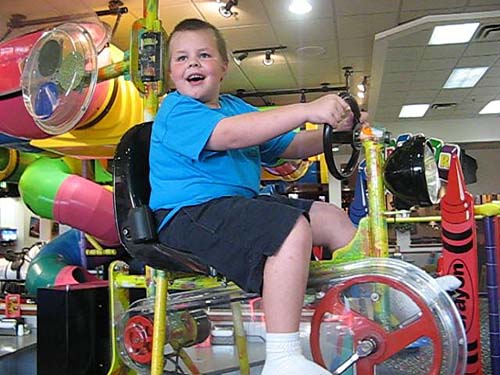


When people say, "but he looks like a NORMAL KID!!!" all I can say is, "That's because he is a NORMAL KID!!!" Just an autistic one!
Friday, April 05, 2013
Autism Understanding: Day 5
Conversation tried
And tried and tried and tried and
Why do they walk away?
I think social thinking and social skills should be incorporated into the general curriculum of every school, at every level. I think even college students need to be required to take social skills classes and training. If people really gained these skills, really got a chance to think them out and practice them before being tossed out there to flounder, the world would just be a better place, all-around.
Anti-bullying programs are a joke. They don't work. Kids seem to regard them as some sort of irritating adult thing, like South Park's Sexual Harassment Panda. In the abstract, people know you don't beat on other people and make fun of them. On the ground, the lines are apparently not so clear. The idea of treating others the way we want to be treated just completely goes over most people's heads. That other people have feelings to hurt, that it might be a bad idea to insult people even when they are not standing in front of you, that being included means being inclusive- these things are apparently harder to learn than they appear.
Besides that, kids who are already serious bullies don't care about anti-bullying programs. They aren't the ones really being targeted. They need a whole different kind of support- someone needs to take them aside and figure out the root of the problem, and address it. Now. Denying that bullying exists in your school, and that no one knows who the bullies are, suggests you might need that kind of intervention yourself. Turning a blind eye is a type of abuse that absolutely requires intervention.
The over-use of the term "bully" isn't helping, either. Is turning a blind eye "a form of bullying"? Perhaps. But let's call it something with more specific implications: abuse. It may seem a passive thing, but really, anyone who has ever worked with people on any level knows that bullying- the direct pressuring of one person trying to exert power over another- happens, and you have to watch for it. If you teach kids (and I mean really teach them, not just note it and move on) early what the pitfalls are that result in bullying, they can at least watch for the traps. When you teach others not only how to act social, but to actually think about social interaction, to think about the other person as well as being self-aware- that gives people the tools to not only avoid the pitfalls, but know what to do if they fall in to one, before it becomes a serious situation.
All too often, people on the spectrum are criticized for "lacking social skills." If we actually thought about social skills and were socially aware and socially thinking, we might realize that it isn't just "an autism thing." Today, I watched Joey in the park. Joey loves babies and little kids, and he wandered about much of the time, trying to interact with families and small kids, play with the babies and get involved with the little ones. No, he's not good at opening interactions, but that's no excuse to hurt his feelings- especially if you an adult, since he is so clearly a child. I could tell you a lot about each and every adult out there in about five seconds, watching their faces as Joey walked up to them and tried to open conversation. And tried. And tried again.
Some of the adults smiled and joined in. Some of them wrinkled their noses and ignored him. A couple families actually picked up their kids and walked away, only to return when he had moved to another part of the park. A group of college kids actually remarked, sitting right next to me, "Someone ought to take that retarded kid home. He's making everybody uncomfortable." You can imagine their faces when Joey came over to me, and we did some signing and playing together, then I gave him a kiss before he returned to his attempts at play. I didn't look. The few seconds of silence before they wandered away was deafening.
This is what passes as social skills?
Imagine how different middle school would be for everyone if social thinking was part and parcel of the curriculum. If kids on the brink of huge social changes and questioning were given the tools to be both self-aware and to understand how their own actions and feelings might affect others, they might have the tools to navigate the social world they are creating. They might understand the real value of diversity, and find the challenge of inclusion far less daunting. With safe, controlled situations to practice in, kids might find going out and making realities a familiar thing, and do it with real confidence and strength in experience, instead of trying to strike out with no idea how to do it.
It's amazing how much easier it is to do something when you have an instruction manual and can practice a bit before going out and doing it "for reals." We know we need to practice skills to get them right. Why do we think we can just go out and use social skills without practice?
And tried and tried and tried and
Why do they walk away?
I think social thinking and social skills should be incorporated into the general curriculum of every school, at every level. I think even college students need to be required to take social skills classes and training. If people really gained these skills, really got a chance to think them out and practice them before being tossed out there to flounder, the world would just be a better place, all-around.
Anti-bullying programs are a joke. They don't work. Kids seem to regard them as some sort of irritating adult thing, like South Park's Sexual Harassment Panda. In the abstract, people know you don't beat on other people and make fun of them. On the ground, the lines are apparently not so clear. The idea of treating others the way we want to be treated just completely goes over most people's heads. That other people have feelings to hurt, that it might be a bad idea to insult people even when they are not standing in front of you, that being included means being inclusive- these things are apparently harder to learn than they appear.
Besides that, kids who are already serious bullies don't care about anti-bullying programs. They aren't the ones really being targeted. They need a whole different kind of support- someone needs to take them aside and figure out the root of the problem, and address it. Now. Denying that bullying exists in your school, and that no one knows who the bullies are, suggests you might need that kind of intervention yourself. Turning a blind eye is a type of abuse that absolutely requires intervention.
The over-use of the term "bully" isn't helping, either. Is turning a blind eye "a form of bullying"? Perhaps. But let's call it something with more specific implications: abuse. It may seem a passive thing, but really, anyone who has ever worked with people on any level knows that bullying- the direct pressuring of one person trying to exert power over another- happens, and you have to watch for it. If you teach kids (and I mean really teach them, not just note it and move on) early what the pitfalls are that result in bullying, they can at least watch for the traps. When you teach others not only how to act social, but to actually think about social interaction, to think about the other person as well as being self-aware- that gives people the tools to not only avoid the pitfalls, but know what to do if they fall in to one, before it becomes a serious situation.
All too often, people on the spectrum are criticized for "lacking social skills." If we actually thought about social skills and were socially aware and socially thinking, we might realize that it isn't just "an autism thing." Today, I watched Joey in the park. Joey loves babies and little kids, and he wandered about much of the time, trying to interact with families and small kids, play with the babies and get involved with the little ones. No, he's not good at opening interactions, but that's no excuse to hurt his feelings- especially if you an adult, since he is so clearly a child. I could tell you a lot about each and every adult out there in about five seconds, watching their faces as Joey walked up to them and tried to open conversation. And tried. And tried again.
Some of the adults smiled and joined in. Some of them wrinkled their noses and ignored him. A couple families actually picked up their kids and walked away, only to return when he had moved to another part of the park. A group of college kids actually remarked, sitting right next to me, "Someone ought to take that retarded kid home. He's making everybody uncomfortable." You can imagine their faces when Joey came over to me, and we did some signing and playing together, then I gave him a kiss before he returned to his attempts at play. I didn't look. The few seconds of silence before they wandered away was deafening.
This is what passes as social skills?
Imagine how different middle school would be for everyone if social thinking was part and parcel of the curriculum. If kids on the brink of huge social changes and questioning were given the tools to be both self-aware and to understand how their own actions and feelings might affect others, they might have the tools to navigate the social world they are creating. They might understand the real value of diversity, and find the challenge of inclusion far less daunting. With safe, controlled situations to practice in, kids might find going out and making realities a familiar thing, and do it with real confidence and strength in experience, instead of trying to strike out with no idea how to do it.
It's amazing how much easier it is to do something when you have an instruction manual and can practice a bit before going out and doing it "for reals." We know we need to practice skills to get them right. Why do we think we can just go out and use social skills without practice?
Thursday, April 04, 2013
Autism Understanding: Day 4
If you sit silent
You can almost hear him think
The world swirls through him.
Joey has discovered our back yard. This is a very exciting thing. He has taken to getting up whenever he feels like it, putting on his shoes, and acting out his favorite games and movies outside. Sometimes he even adds to them, pretending to be the characters, acting out what they might do or say or think. Joey is very good at imitating voices. He is an amazing Mr. Waternoose.
What I especially like is the getting up and moving part. Moving really helps Joey's brain make connections and think things out. I am convinced that much of the bolting behavior we see is actually Joey trying to get away to take a walk, to process what is happening around him and to him; to escape the immediate melee and make sense of it. Figuring out that he can get up and do this at home is, I believe, a huge step forward for him.
I also like that he "gets" the rule that he is to stay in the back yard. We are constantly having to put up doors and locks and obstacles, lest his frustration overwhelm him and he bolts. It feels like we are building a prison around him; I'm betting he feels it, too. Joey doesn't have firm enough control of language as a communication tool to be able to express himself to, say, a police officer. During his longest bolt, he made it to the park, talked to some of the folks there, and came home; but that is not the same as someone in a uniform stopping you and asking you where you live and if you are OK. When the anxiety goes up, the ability to speak plummets for him- usually increasing frustration and anxiety in an out-of-control vortex of screaming abyss. Being able to have him go into the back yard and stay there, without having to put up a six-foot solid gate (there is a locked gate, but he could, with a little effort, climb it) to pen him is something I think may be important. To be able to mark and understand boundaries, without having to put up physical barriers to understand them- that is something to learn, a lesson about personal and public space. It is important to know the boundaries of "home."
There are boys in our neighborhood who roam. Awesome Neighbor was roaming by the time he was nine- often to our house, where we understood and accepted him, and didn't mind a little bouncing. There was no doubt that when the call came, he would turn for home. One of our current roamers- all in middle school- is an autistic kid from around the corner. It is a tug at heart and mind to think of Joey in his locked yard, when other boys seem able to roam free, with little concern from their parents that they will, when evening comes, turn their faces toward home. It is a hard line to walk, between trust and safety.
It is a line that I know one day I will have to step over. He will walk down the street, and I will have to trust that when the sun goes down or the text goes through, he will turn his feet towards home. And he might say he's going one place, and actually go another. He may decide to turn his feet another way. It is the risk every parent takes, that first time they let their child out the door and out of their sight. Risk and trust. Risk and faith.
If you have never seen that panic in Joey's eye, that rise of color to his face, that bolting trot, it may be hard to understand how fine the line is, how delicate the knife edge. One day, he will be ready. But not this day.
This day, we are taking the first steps along that line. He gets up, and slips out the back door. And I trust that when he feels done playing, instead of going over that gate, he will come back in that door.
We all have to start somewhere.
You can almost hear him think
The world swirls through him.
Joey has discovered our back yard. This is a very exciting thing. He has taken to getting up whenever he feels like it, putting on his shoes, and acting out his favorite games and movies outside. Sometimes he even adds to them, pretending to be the characters, acting out what they might do or say or think. Joey is very good at imitating voices. He is an amazing Mr. Waternoose.
What I especially like is the getting up and moving part. Moving really helps Joey's brain make connections and think things out. I am convinced that much of the bolting behavior we see is actually Joey trying to get away to take a walk, to process what is happening around him and to him; to escape the immediate melee and make sense of it. Figuring out that he can get up and do this at home is, I believe, a huge step forward for him.
I also like that he "gets" the rule that he is to stay in the back yard. We are constantly having to put up doors and locks and obstacles, lest his frustration overwhelm him and he bolts. It feels like we are building a prison around him; I'm betting he feels it, too. Joey doesn't have firm enough control of language as a communication tool to be able to express himself to, say, a police officer. During his longest bolt, he made it to the park, talked to some of the folks there, and came home; but that is not the same as someone in a uniform stopping you and asking you where you live and if you are OK. When the anxiety goes up, the ability to speak plummets for him- usually increasing frustration and anxiety in an out-of-control vortex of screaming abyss. Being able to have him go into the back yard and stay there, without having to put up a six-foot solid gate (there is a locked gate, but he could, with a little effort, climb it) to pen him is something I think may be important. To be able to mark and understand boundaries, without having to put up physical barriers to understand them- that is something to learn, a lesson about personal and public space. It is important to know the boundaries of "home."
There are boys in our neighborhood who roam. Awesome Neighbor was roaming by the time he was nine- often to our house, where we understood and accepted him, and didn't mind a little bouncing. There was no doubt that when the call came, he would turn for home. One of our current roamers- all in middle school- is an autistic kid from around the corner. It is a tug at heart and mind to think of Joey in his locked yard, when other boys seem able to roam free, with little concern from their parents that they will, when evening comes, turn their faces toward home. It is a hard line to walk, between trust and safety.
It is a line that I know one day I will have to step over. He will walk down the street, and I will have to trust that when the sun goes down or the text goes through, he will turn his feet towards home. And he might say he's going one place, and actually go another. He may decide to turn his feet another way. It is the risk every parent takes, that first time they let their child out the door and out of their sight. Risk and trust. Risk and faith.
If you have never seen that panic in Joey's eye, that rise of color to his face, that bolting trot, it may be hard to understand how fine the line is, how delicate the knife edge. One day, he will be ready. But not this day.
This day, we are taking the first steps along that line. He gets up, and slips out the back door. And I trust that when he feels done playing, instead of going over that gate, he will come back in that door.
We all have to start somewhere.
Wednesday, April 03, 2013
Autism Understanding: Day 3
I can hear him scream
My heart shatters, my feet run
Please help keep him safe.
Spring break sucks.
I love my sons, and I love having them home. I love having them to cuddle late into the morning. I love listening to them play, and having their wild feet race through the house.
What I don't love is Joey getting completely overwhelmed by the total schedule upheaval, and melting down.
Trying to mitigate the situation, I usually stat our day by printing out a schedule for the day, which Joey is permitted to carry with him. However, there is absolutely no way that schedule can be anything remotely like, "7:15, Get on the bus. 8:05, Arrive at school. 9 am, math class..." See, they have a break, but like so many other working parents, I do not. On top of that, I don't do regular work. I can't just drop them off at a daycare or other structured situation, or even a corner of an office. I work 2-3 jobs every day, with varying schedule from day-to-day; so I can't even set a schedule today and have Joey understand that will be the schedule tomorrow, because it won't be.
This piecework income production does very well in working around therapy appointments and bus schedules, but isn't very conducive to consistency when Joey is home and needs a regular schedule. We can't just stay at home and be quiet and still, as we can on winter break, when most of my jobs are also on hiatus. Running about to Grandma's is even a bit of a strain on his nerves, as the only solid warning he gets to anticipate when he will be going is basically that piece of paper he wakes up to, even when I tell him the day before and go over the schedule as best I can. Often, i don't even know where I will be until the morning. Sudden grocery stops and Walmart runs are simple when the boys are in school; these things are require huge amounts of planning and prep when they are home on break.
I also can't say he didn't need the break from work; to just keep sending him to school right now would also not really work. There have been far too many changes there, and his anxiety levels are through the roof. The sudden-para-switcheroo has also lead to a change his academic schedule, which has him thoroughly unbalanced. Now he's not only overwhelmed at home, school is also a mass of confusion and surprises.
I would love nothing better than to spend a day at home, letting both boys breathe and play in the yard as they felt the urge to jump around. I'd like to give Joey a day when he felt some semblance of control over his own life and his own time. But that just doesn't happen on these little-but-just-too-long breaks, such as Spring Break.
My heart shatters, my feet run
Please help keep him safe.
Spring break sucks.
I love my sons, and I love having them home. I love having them to cuddle late into the morning. I love listening to them play, and having their wild feet race through the house.
What I don't love is Joey getting completely overwhelmed by the total schedule upheaval, and melting down.
Trying to mitigate the situation, I usually stat our day by printing out a schedule for the day, which Joey is permitted to carry with him. However, there is absolutely no way that schedule can be anything remotely like, "7:15, Get on the bus. 8:05, Arrive at school. 9 am, math class..." See, they have a break, but like so many other working parents, I do not. On top of that, I don't do regular work. I can't just drop them off at a daycare or other structured situation, or even a corner of an office. I work 2-3 jobs every day, with varying schedule from day-to-day; so I can't even set a schedule today and have Joey understand that will be the schedule tomorrow, because it won't be.
This piecework income production does very well in working around therapy appointments and bus schedules, but isn't very conducive to consistency when Joey is home and needs a regular schedule. We can't just stay at home and be quiet and still, as we can on winter break, when most of my jobs are also on hiatus. Running about to Grandma's is even a bit of a strain on his nerves, as the only solid warning he gets to anticipate when he will be going is basically that piece of paper he wakes up to, even when I tell him the day before and go over the schedule as best I can. Often, i don't even know where I will be until the morning. Sudden grocery stops and Walmart runs are simple when the boys are in school; these things are require huge amounts of planning and prep when they are home on break.
I also can't say he didn't need the break from work; to just keep sending him to school right now would also not really work. There have been far too many changes there, and his anxiety levels are through the roof. The sudden-para-switcheroo has also lead to a change his academic schedule, which has him thoroughly unbalanced. Now he's not only overwhelmed at home, school is also a mass of confusion and surprises.
I would love nothing better than to spend a day at home, letting both boys breathe and play in the yard as they felt the urge to jump around. I'd like to give Joey a day when he felt some semblance of control over his own life and his own time. But that just doesn't happen on these little-but-just-too-long breaks, such as Spring Break.
Tuesday, April 02, 2013
Autism Understanding: Day Two
Potato chips are
Duck food. Food for ducks. Duck FOOD.
They will make YOU sick!
Processing is something Joey often does "loud and proud." He repeats phrases and words, over and over again, rolling them over in mind and mouth and ear. He watches how you react to them. He giggles if he thinks they are funny. If you say something mean to him, or in a tone he doesn't like, I will hear it for weeks- exactly as you said it.
This is advanced echolalia.
Often when new caretakers and therapists meet Joey, they ask why he is not diagnosed with Asperger's Syndrome. I believe this question is rooted in a basic ignorance of autism, and of Asperger's Syndrome. As is not just "an autistic who speaks." Not all kids with "classic" autism are non-verbal. Being verbal doesn't immediately relegate you to the title "Pervasive Developmental Disorder- Not Otherwise Specified" (PDD-NOS). These labels aren't about functioning or not functioning. They are often connected to how and why these kids learn about communication and its uses, what ways they try to socialize and communicate, and yes, how successful they are in various ways of coping with the world around them. The blurring between labels is why the new DSM is going to umbrella various terms under "autism spectrum" instead of keeping them as separate diagnoses.
The hallmark of Asperger's Syndrome is the development of language that is recognizable as "in the normal range" by neurotypical benchmarks. Joey does not have this. Yes, he speaks. We have worked very hard to help him learn to communicate in a world dominated by people who are not autistic. He has become pretty decent at using the tool to communicate. But his speech is not "normal." His ways of considering the world around him and processing it are all his own. And often, it is rooted in a connection between words, phrases, and emotions, which he can then piece together into recognizable language when needful. Whereas Temple Grandin talks about "thinking in pictures", I think Joey on many levels "thinks in phrases." When he is presented with a communication opportunity, he spins through words and phrases he's heard before, how they were used, what labels to put into them. He picks the ones he thinks he will be useful, stitches them together, and out they come.
Every time Joey speaks, he takes a risk. Will these be the words I needed to respond? Is this was they were expecting?
It makes answering questions a horrible, awesome, overwhelming task. First, you have to process the question itself. What are these words saying? Do we have similar words we can process and are "on file"? What kind of response is expected? Do we have similar situations we can use to help? Then we have to process out an answer- which may be unique in context and wording. We have only a few familiar words in the question to attach meaning, and to find in our "files" matching expected and appropriate responses. It doesn't matter if he understands what he just read, or saw, or heard. The question is a separate processing task, unrelated, isolated, and with so much going in that it exponentially increases the risk and energy to respond.
Speaking requires a great deal of energy. You can imagine what a test might do to Joey. How can you evaluate someone's understanding of concepts when it is all they can do to process the evaluation tool itself?
Yet Joey knows what is expected. So he keeping playing with the words, the phrases, bouncing them about his mind, his mouth, his ear. He keeps trying, and trying, and trying.
And then we wonder why he's so anxious and frustrated all the time. Silly us.
Duck food. Food for ducks. Duck FOOD.
They will make YOU sick!
Processing is something Joey often does "loud and proud." He repeats phrases and words, over and over again, rolling them over in mind and mouth and ear. He watches how you react to them. He giggles if he thinks they are funny. If you say something mean to him, or in a tone he doesn't like, I will hear it for weeks- exactly as you said it.
This is advanced echolalia.
Often when new caretakers and therapists meet Joey, they ask why he is not diagnosed with Asperger's Syndrome. I believe this question is rooted in a basic ignorance of autism, and of Asperger's Syndrome. As is not just "an autistic who speaks." Not all kids with "classic" autism are non-verbal. Being verbal doesn't immediately relegate you to the title "Pervasive Developmental Disorder- Not Otherwise Specified" (PDD-NOS). These labels aren't about functioning or not functioning. They are often connected to how and why these kids learn about communication and its uses, what ways they try to socialize and communicate, and yes, how successful they are in various ways of coping with the world around them. The blurring between labels is why the new DSM is going to umbrella various terms under "autism spectrum" instead of keeping them as separate diagnoses.
The hallmark of Asperger's Syndrome is the development of language that is recognizable as "in the normal range" by neurotypical benchmarks. Joey does not have this. Yes, he speaks. We have worked very hard to help him learn to communicate in a world dominated by people who are not autistic. He has become pretty decent at using the tool to communicate. But his speech is not "normal." His ways of considering the world around him and processing it are all his own. And often, it is rooted in a connection between words, phrases, and emotions, which he can then piece together into recognizable language when needful. Whereas Temple Grandin talks about "thinking in pictures", I think Joey on many levels "thinks in phrases." When he is presented with a communication opportunity, he spins through words and phrases he's heard before, how they were used, what labels to put into them. He picks the ones he thinks he will be useful, stitches them together, and out they come.
Every time Joey speaks, he takes a risk. Will these be the words I needed to respond? Is this was they were expecting?
It makes answering questions a horrible, awesome, overwhelming task. First, you have to process the question itself. What are these words saying? Do we have similar words we can process and are "on file"? What kind of response is expected? Do we have similar situations we can use to help? Then we have to process out an answer- which may be unique in context and wording. We have only a few familiar words in the question to attach meaning, and to find in our "files" matching expected and appropriate responses. It doesn't matter if he understands what he just read, or saw, or heard. The question is a separate processing task, unrelated, isolated, and with so much going in that it exponentially increases the risk and energy to respond.
Speaking requires a great deal of energy. You can imagine what a test might do to Joey. How can you evaluate someone's understanding of concepts when it is all they can do to process the evaluation tool itself?
Yet Joey knows what is expected. So he keeping playing with the words, the phrases, bouncing them about his mind, his mouth, his ear. He keeps trying, and trying, and trying.
And then we wonder why he's so anxious and frustrated all the time. Silly us.
Monday, April 01, 2013
Autism Understanding: Day One
He pads in to me
Leans his head on my tummy
Whispers, "I love you."
The first thing you should know about my son is he is one of the most unique people I have ever met. If you know me, you know what a huge thing I am saying. Absolutely, positively unique; no one sees the world quite the way he does, and the intensity with which he loves people around him can sometimes be overwhelming. He likes thing in his own way, in his own time.
And once you grasp the absolutely uniqueness of everyone around you, and especially Joey, I think you will find the world is a fascinating, intense place.
Joey has a way of walking right up to people and just starting talking, as if he's known them all his life. It takes people by surprise, unexpected and often disconcerting to strangers. However, it is very rare for them not to smile, if they give him a minute, listen to what he has to say, listen to the love and friendship and acceptance he is offering. I can tell a lot about a person in how they react to Joey; the first three seconds when he walks up and accepts them as people, just as they are. Will they repay the compliment, the kindness, the love, or not? It often turns out to be all I need to know.
As we enter April, I ask you to move beyond just "Autism awareness" and into "Autism understanding." Take a minute and listen to what Joey has to offer you. You might find that there really are people here with the one reason of loving everyone, and giving each and every one of us a chance to be ourselves.
Leans his head on my tummy
Whispers, "I love you."
The first thing you should know about my son is he is one of the most unique people I have ever met. If you know me, you know what a huge thing I am saying. Absolutely, positively unique; no one sees the world quite the way he does, and the intensity with which he loves people around him can sometimes be overwhelming. He likes thing in his own way, in his own time.
And once you grasp the absolutely uniqueness of everyone around you, and especially Joey, I think you will find the world is a fascinating, intense place.
Joey has a way of walking right up to people and just starting talking, as if he's known them all his life. It takes people by surprise, unexpected and often disconcerting to strangers. However, it is very rare for them not to smile, if they give him a minute, listen to what he has to say, listen to the love and friendship and acceptance he is offering. I can tell a lot about a person in how they react to Joey; the first three seconds when he walks up and accepts them as people, just as they are. Will they repay the compliment, the kindness, the love, or not? It often turns out to be all I need to know.
As we enter April, I ask you to move beyond just "Autism awareness" and into "Autism understanding." Take a minute and listen to what Joey has to offer you. You might find that there really are people here with the one reason of loving everyone, and giving each and every one of us a chance to be ourselves.
Friday, March 29, 2013
The Blues
Autism Awareness Month is upon us, just on that far side of Easter. With comes the Light It Up Blue campaign, bringing awareness to anybody who is actually paying attention or cares even the slightest bit about why your porch light is blue all April, and no other time.
I have noticed that the autistic adult community is a little torn about Light It Up Blue. There is a gambit of feeling towards it, from antipathy to appreciation. I can't please everybody- nobody can. But will I light it up blue?
Yes, I will.
Changing my light bulb actually started conversation in our neighborhood, especially since I was not alone in doing it. I think some of our neighbors were genuinely surprised to see so many porches go blue for April. They wanted to know what was up. And once you get someone to talk, you can get the reins of that conversation and start some folks thinking.
For me, it isn't about Autism Awareness. It is about Autism Understanding.
Many folks in our town know Joey, and they know he is autistic. Few know what that really means. They are surprised to find he loves to be around people, and loves to talk to people. They are surprised to find he is intelligent and observant. He laughs, he chats, he pretends. Part of the surprise is how many "autism awareness" campaigns teach people to look for kids who are aloof, withdrawn, or even violent. Kids who burst into meltdowns at the drop of a hat, who make weird noises, who flap their hands, who don't talk at all- those are the kids many of these campaigns push into the public eye. Any of these things can apply to a person with autism. Or not.
Seizing a campaign like Light It Up Blue and using it as a tool is an important way to educate the majority of folks out there, who have no clue what it means to be autistic. The majority of folks who have no clue even what it means to care about or be a person with special needs or disabilities. I always go back and think, what were my attitudes and opinions before I knew Joey? How do I get people around us to understand? How do you remove ignorance (the only real was to remove fear)?
If my blue light bulb makes even one person stop and think, stop and ask, stop and understand, then that is one more than had done that yesterday. It's one step beyond just awareness. It's one step closer to understanding being the norm.
I have noticed that the autistic adult community is a little torn about Light It Up Blue. There is a gambit of feeling towards it, from antipathy to appreciation. I can't please everybody- nobody can. But will I light it up blue?
Yes, I will.
Changing my light bulb actually started conversation in our neighborhood, especially since I was not alone in doing it. I think some of our neighbors were genuinely surprised to see so many porches go blue for April. They wanted to know what was up. And once you get someone to talk, you can get the reins of that conversation and start some folks thinking.
For me, it isn't about Autism Awareness. It is about Autism Understanding.
Many folks in our town know Joey, and they know he is autistic. Few know what that really means. They are surprised to find he loves to be around people, and loves to talk to people. They are surprised to find he is intelligent and observant. He laughs, he chats, he pretends. Part of the surprise is how many "autism awareness" campaigns teach people to look for kids who are aloof, withdrawn, or even violent. Kids who burst into meltdowns at the drop of a hat, who make weird noises, who flap their hands, who don't talk at all- those are the kids many of these campaigns push into the public eye. Any of these things can apply to a person with autism. Or not.
Seizing a campaign like Light It Up Blue and using it as a tool is an important way to educate the majority of folks out there, who have no clue what it means to be autistic. The majority of folks who have no clue even what it means to care about or be a person with special needs or disabilities. I always go back and think, what were my attitudes and opinions before I knew Joey? How do I get people around us to understand? How do you remove ignorance (the only real was to remove fear)?
If my blue light bulb makes even one person stop and think, stop and ask, stop and understand, then that is one more than had done that yesterday. It's one step beyond just awareness. It's one step closer to understanding being the norm.
Thursday, March 21, 2013
Word Processing
"Ridicule. Say, 'ridicule.' Noun. To scorn or mock. To mock means 'to make fun of.'"
Joey has discovered that the vocabulary-building program he uses at school has a website, and he can access words right through "level 12" (I think that means "12th grade")- complete with parts of speech, definition, and even examples. He's delighted. He can now process out all the words he can digest, whenever he feels like it.
"Vain. Say, 'vain.' To think well of oneself. Or to be useless. Mommy, say, 'vain.'"
One of the good things about the program is that it is not spelling-only; it actually pushes kids to improve their vocabulary, to broaden their use and understanding of language. Plus, we can access it 24 hours a day- whenever we need a comforting activity.
"Misfortune. Say, 'misfortune.' Unlucky, trouble. Mommy, today I had a misfortune. See, Mommy? You know what would be the worst misfortune, Mommy? If you died. That would be a terrible misfortune."
I have been listening carefully to the words Joey has been picking to repeat. A lot of them have been... interesting. And negative. He seems to be not only processing words, but trying to process words that make him uncomfortable; something he has done, loud and proud, since he was pretty small. He now has whole sentences to echo, not just the word itself.
"Slay. To kill violently. Slay means 'to kill.' You slayed me, Mommy!"Interestingly, he is also not always right. He's having trouble with phrases such as "in vain"- which seems to him oddly unrelated to the word "vain." Separating the two is very difficult for him. He's also running about testing us in multiple-choice format. Sometimes he even tells us what the question is. OR what the choices are. Or neither. Rarely both.
"Appall. Say, 'appall.' To cause horror. H-o-r-r-o-r, Mommy. Appall!"
Sometimes he looks up the signs for the words. He seems to think it funny. Or an excuse to get my phone. If he can't find a sign, he runs about finger-spelling the word. He's getting pretty good at finger-spelling... he's getting plenty of practice.
"Rout. Mommy, you routed me. That means you defeated me completely."
At least it's educational, right?
Right?
"Jeer. Verb. To mock. It means to make fun of, and not nicely, Mommy. It's not nice to jeer, Mommy."
No, my love. You keep talking it out, though. Some of us just have to do that processing aloud.
Tuesday, March 19, 2013
The Meeting Before the Meeting About the Next Meeting
Yep, you guessed it: IEP season is upon us. In fact, it has taken us by storm. And when I say "storm", I mean "seized by the throat and shaken vigorously in a tornado about to crash into a tsunami."
I told our new case manager that our IEP meetings tend to take about 3 hours. She didn't believe me. We're scheduled for an hour and 45 minutes. I have people hired to come to this meeting, and I do not want to have to have a continuance and try to coordinate these people again. Fortunately, they are there for a single purpose: the get Joey's placement right. And that is just one facet of an IEP meeting. Hence, I want to have our ducks in a row for the other stuff, like goals and accommodations. I want those all drafted and ready, so we don't have to have a long discussion about them that takes, say, an hour and a half.
Or maybe I do. Then I can just pop up and say, "And your school can't do all this, so here's a form to sign to send him to Awesome New School. Sign here. Thanks. Have a great day!" And the school folks would sign it and we would merrily be ready for next year.
Like that would ever happen.
What this means is that we- being the teachers who actually care about Joey- and I are trying to work in time to get the goals and accommodations hammered out properly. Or at all. I think its time for an independent educational eval, so we get a better look at Joey's education as a package- and have a clearer view of where he is, where he should be, and what skills he may need support with- including gifted support. We definitely need some notion of what needs to be in this IEP- its for Middle School, and I want everything spelled out exactly. IF we get stuck in the school, this will be a whole new world of people, a whole new culture with a whole new attitude toward accommodation. It is important that we leave nothing vague, no guesswork, no "well, I know what you mean by that, we can fiddle". They don't know Joey. They don't know me. And I am not a whit convinced they know what they are doing or getting into.
So we're having a meeting, to start hashing. Right before the meeting where we work out the ESY. Then we have the Big Meeting next week.
I think I really need a nap. But I have a meeting to go to.
I told our new case manager that our IEP meetings tend to take about 3 hours. She didn't believe me. We're scheduled for an hour and 45 minutes. I have people hired to come to this meeting, and I do not want to have to have a continuance and try to coordinate these people again. Fortunately, they are there for a single purpose: the get Joey's placement right. And that is just one facet of an IEP meeting. Hence, I want to have our ducks in a row for the other stuff, like goals and accommodations. I want those all drafted and ready, so we don't have to have a long discussion about them that takes, say, an hour and a half.
Or maybe I do. Then I can just pop up and say, "And your school can't do all this, so here's a form to sign to send him to Awesome New School. Sign here. Thanks. Have a great day!" And the school folks would sign it and we would merrily be ready for next year.
Like that would ever happen.
What this means is that we- being the teachers who actually care about Joey- and I are trying to work in time to get the goals and accommodations hammered out properly. Or at all. I think its time for an independent educational eval, so we get a better look at Joey's education as a package- and have a clearer view of where he is, where he should be, and what skills he may need support with- including gifted support. We definitely need some notion of what needs to be in this IEP- its for Middle School, and I want everything spelled out exactly. IF we get stuck in the school, this will be a whole new world of people, a whole new culture with a whole new attitude toward accommodation. It is important that we leave nothing vague, no guesswork, no "well, I know what you mean by that, we can fiddle". They don't know Joey. They don't know me. And I am not a whit convinced they know what they are doing or getting into.
So we're having a meeting, to start hashing. Right before the meeting where we work out the ESY. Then we have the Big Meeting next week.
I think I really need a nap. But I have a meeting to go to.
Tuesday, March 05, 2013
How It Is Supposed to Be
This morning was Andy's annual IEP. I wasn't really dreading this one. Andy's got a rockin' team, and they know him and his needs well. We got a draft sent home to look over, and we were ready to go. We got to the meeting, and we talked about Andy, what he has accomplished, what he will need to succeed in school, and we got down to writing the IEP.
All was going almost party-like, until the admin looked at the screen and brought it to a screeching halt. See, Andy's official special ed category is LD- writing disability (dysgraphia). Apparently, instead of being able to consider the needs to the child as an individual despite the specific labeling, we instead can only address items directly related to the label- ie, to writing. As most folks are apparently ignorant of dysgraphia and do not understand it is a pervasive disability, and as it was written specifically as a "disability in writing", the IEP can only address problems with writing at this time.
And the entire team choked, coughed, and sputtered, and then turned to me and said, "well, we need to get his ADHD officially diagnosed..."
And I had a bovine. I pointed out that not only was he officially diagnosed, the school had the record of it. Although not mentioned in the eligibility meeting that was successful, it was recognized in the pre-kindergarten child study when we were turned down. And I said flat out that I believe that had we been given appropriate and adequate service then, we would not be having these meetings now. Early intervention really does make a real difference.
So without missing a beat, the other folks said, this is wrong, and it needs to be fixed. Immediately.
We closed down the meeting, and set up the next one. We put in requests for evals and testing. We return to eligibility, and get this made right, so that we can write his IEP properly, and his needs can be met. The organizational goals and sensory supports we had discussed could be put into place. This needs to happen, so he can access his education.
This is how it should work- the teachers and therapists see there are needs, the parent sees there are needs, and the paperwork is fixed to be sure it reflects those needs and the required accommodations. The case manager steps up and says, "this needs to say this, let's get it done." And then we put the cogs in motion to get it done. The team works as a team, not as a battle.
Yes, folks, this is the way it should work. You discuss the needs, and then make the paperwork say what is needful- not the other way around.
All was going almost party-like, until the admin looked at the screen and brought it to a screeching halt. See, Andy's official special ed category is LD- writing disability (dysgraphia). Apparently, instead of being able to consider the needs to the child as an individual despite the specific labeling, we instead can only address items directly related to the label- ie, to writing. As most folks are apparently ignorant of dysgraphia and do not understand it is a pervasive disability, and as it was written specifically as a "disability in writing", the IEP can only address problems with writing at this time.
And the entire team choked, coughed, and sputtered, and then turned to me and said, "well, we need to get his ADHD officially diagnosed..."
And I had a bovine. I pointed out that not only was he officially diagnosed, the school had the record of it. Although not mentioned in the eligibility meeting that was successful, it was recognized in the pre-kindergarten child study when we were turned down. And I said flat out that I believe that had we been given appropriate and adequate service then, we would not be having these meetings now. Early intervention really does make a real difference.
So without missing a beat, the other folks said, this is wrong, and it needs to be fixed. Immediately.
We closed down the meeting, and set up the next one. We put in requests for evals and testing. We return to eligibility, and get this made right, so that we can write his IEP properly, and his needs can be met. The organizational goals and sensory supports we had discussed could be put into place. This needs to happen, so he can access his education.
This is how it should work- the teachers and therapists see there are needs, the parent sees there are needs, and the paperwork is fixed to be sure it reflects those needs and the required accommodations. The case manager steps up and says, "this needs to say this, let's get it done." And then we put the cogs in motion to get it done. The team works as a team, not as a battle.
Yes, folks, this is the way it should work. You discuss the needs, and then make the paperwork say what is needful- not the other way around.



Saturday, February 23, 2013
Nowhere to Go
So you find yourself at an IEP meeting that you never really wanted to go to, having to say things that make your heart hurt, and trying to figure out what can be done to keep your child from losing ground until you can have another IEP meeting that will make your heart hurt and try to actually do something useful.
Wait, I think that might be every IEP meeting.
There's a lot to make my heart hurt right now.
I had to admit that Joey cannot hold his own in a "mainstream" classroom without support. And not just any support, he needs specialized, experienced, trained support to be successful in there. And that is something the school not only does not have, but has no time to create or hire for this year. A para, we could probably locate. An understanding teacher, apparently not so much.
But it got worse. If we take him out of this room, where do we put him?
Let me back up a minute to give you a better picture.
One of Joey's outstanding strengths is his grasp of math. He loves it. He breathes it. He perseverates on it. HE finds it logical, sensible, comfortingly regular and patterned. Math. It rocks.
At the start of third grade, I was called into the principal's office. I was nervous, as we had already been running into tough bolting situations with Joey by then- and it was a new behavior, so we didn't know the signs yet. TO my surprise, he was suggesting we might want to move Joey up a few grades in math, if we could find someone to teach him. He had just passed the end-of-year tests for both fourth and fifth grade. However, they didn't move him, because he didn't pass the third grade test, and there were some holes in skills- so hey, we had time to fill them, and use math time for social skills practice. I should have made them move him up.
Joey's favorite car riding game is to shout out math questions and answer them. Sometimes he does the shouting. Sometimes the answering. It's all awesome to him. And I'm not talking namby-pamby, simple-arithmetic stuff. I'm talking 34X78. No, you have to do it in your head. And you have about five seconds.
When Joey does well for his school speech therapist, she allows him, as his treat, to do a math problem. Right now, he's in love with long division. Only he doesn't like to write it all out, because that's messy. If he absolutely has to write it out, he'll flip the paper over, re-write the question, and the answer, so it looks tidy. He will work hard so he can have his math problem.
He also loves to watch other people do math. One of his favorite treats last year was to watch one of his other teachers, who was a bit of a math wiz, do long division on the white board. It made him giggle to see her do it so fast. I found out this week that he'll giggle when I do it, too. And he'll work hard for a treat of watching you do math super fast.
This past quarter, he got a C in math. And the reason? He was flunking math tests, big-time. He got 40 on his 9 weeks test. This quarter, we started off with a C on his fractions test.
Does. Not. Compute.
Was it one of those "holes" that needed to be filled? I looked at the paper, asked him the questions. He responded immediately- and correctly. So I asked more complicated questions. Still correct. Still immediate.
Does. Not. Compute.
So as part of the IEP meeting, we confronted this enigma. The excuse? Well, there are more word problems now, because the SOL is "more rigorous."
After we cleared up the meaning of the word "rigorous" (after all, the test isn't asking for more relevant skills or higher degrees of mathematical knowledge- it is simply adding a bunch of language to process), the conclusion was stated point-blank by our administrator: the problem wasn't the math. It was the disability. Joey has a language processing and communication disability, remember? And guess what is NOT accommodated when you plunk a bunch of language-heavy tests in front of him?
I'm not even going to start with the problem of doing this on the SOLs, and the discriminatory obstacle it is going to put in front of my child (what do they want to test? Math ability? Or language comprehension and test-taking ability? That's rhetorical, BTW. Unfortunately, we know the answer there). I just laid it out there that I don't give a damn about SOL tests, because they are useless. They are poorly designed and poorly administered. They disregard a child's developmental level- or even the appropriate developmental ability and level of any age group- making the tests nearly impossible to take in the first place. They are "scaled", but not to an scale that would be remotely useful for comparing the scores to anything else known to man. They teach kids more about how to get through testing than acting as evaluation tools or helping kids learn anything. They can't even be used as data points for a child's progress or level of ability. They are useless, stressful, inappropriate trash.
But back to Joey. If you want Joey to be able to handle word problems, you have to teach him how to handle word problems. We've proven that before. When you teach him the key words and what they mean, he does fine. They become part of the puzzle, part of the pattern, and it is all good. If Mary has six apples and Johnny eats three apples, how many apples do you have left? "Do you have left" means to look for a subtraction problem. The big number probably comes first. The little number comes second. Bingo, 6-3=3. Johnny and Mary are left with three apples. Almost every word problem has these patterns, you just have to teach them- especially to kids who have language processing disabilities.
I'm not sure why a decent teacher would not pick up on the problem here, or its solution. Kid has no problem with math. Kid failing word problems. Stop and teach kid to decode word problems. Problem solved. Heck, I'd be thinking of that even if the kid didn't have a known language processing disability. Lots of kids trip on word problems.
So, we have no trained, experienced support, and a teacher who has no concept of language processing disabilities or how to accommodate a child with them, she just flunks him. Then she lets him leave her classroom without even watching to be sure he gets across the hall, and thus he ends up in the parking lot. Or at least at the door. The story kinda got changed at the meeting. Again. Communication even between the staff appears to be in shambles.
Time to get him out of there, before someone gets hurt. Or has to be bailed out jail. You get the picture.
So, where to go? What do you do with a twice-exceptional child? Where do you place a child who has serious disabilities in language but is brilliant in math? The self-contained room is not designed for that. The inclusion room is not designed for that. Both of those are designed for a slower pace, not a faster one, in the lesson material. How do you keep the math coming, while working on the language? How do you fight boredom while addressing challenge?
The fact is, schools are not set up to deal with children as individuals in any way. Special ed is "so expensive" partly because regular classrooms are not designed to deviate or flex. Regular ed teachers are not trained to deal with a diversity of student needs, only a narrow scope of student skills- specific skills at that. Special ed is a whole different way of understanding kids and how to teach them effectively; a way that would benefit all kids. Most of the special ed "techniques" I've seen are just plain old good teaching. Yet, there are those who need something different. Something unique. Something individualized.
What, you mean, like an IEP?
Right. An IEP with nowhere to go.
Wait, I think that might be every IEP meeting.
There's a lot to make my heart hurt right now.
I had to admit that Joey cannot hold his own in a "mainstream" classroom without support. And not just any support, he needs specialized, experienced, trained support to be successful in there. And that is something the school not only does not have, but has no time to create or hire for this year. A para, we could probably locate. An understanding teacher, apparently not so much.
But it got worse. If we take him out of this room, where do we put him?
Let me back up a minute to give you a better picture.
One of Joey's outstanding strengths is his grasp of math. He loves it. He breathes it. He perseverates on it. HE finds it logical, sensible, comfortingly regular and patterned. Math. It rocks.
At the start of third grade, I was called into the principal's office. I was nervous, as we had already been running into tough bolting situations with Joey by then- and it was a new behavior, so we didn't know the signs yet. TO my surprise, he was suggesting we might want to move Joey up a few grades in math, if we could find someone to teach him. He had just passed the end-of-year tests for both fourth and fifth grade. However, they didn't move him, because he didn't pass the third grade test, and there were some holes in skills- so hey, we had time to fill them, and use math time for social skills practice. I should have made them move him up.
Joey's favorite car riding game is to shout out math questions and answer them. Sometimes he does the shouting. Sometimes the answering. It's all awesome to him. And I'm not talking namby-pamby, simple-arithmetic stuff. I'm talking 34X78. No, you have to do it in your head. And you have about five seconds.
When Joey does well for his school speech therapist, she allows him, as his treat, to do a math problem. Right now, he's in love with long division. Only he doesn't like to write it all out, because that's messy. If he absolutely has to write it out, he'll flip the paper over, re-write the question, and the answer, so it looks tidy. He will work hard so he can have his math problem.
He also loves to watch other people do math. One of his favorite treats last year was to watch one of his other teachers, who was a bit of a math wiz, do long division on the white board. It made him giggle to see her do it so fast. I found out this week that he'll giggle when I do it, too. And he'll work hard for a treat of watching you do math super fast.
This past quarter, he got a C in math. And the reason? He was flunking math tests, big-time. He got 40 on his 9 weeks test. This quarter, we started off with a C on his fractions test.
Does. Not. Compute.
Was it one of those "holes" that needed to be filled? I looked at the paper, asked him the questions. He responded immediately- and correctly. So I asked more complicated questions. Still correct. Still immediate.
Does. Not. Compute.
So as part of the IEP meeting, we confronted this enigma. The excuse? Well, there are more word problems now, because the SOL is "more rigorous."
After we cleared up the meaning of the word "rigorous" (after all, the test isn't asking for more relevant skills or higher degrees of mathematical knowledge- it is simply adding a bunch of language to process), the conclusion was stated point-blank by our administrator: the problem wasn't the math. It was the disability. Joey has a language processing and communication disability, remember? And guess what is NOT accommodated when you plunk a bunch of language-heavy tests in front of him?
I'm not even going to start with the problem of doing this on the SOLs, and the discriminatory obstacle it is going to put in front of my child (what do they want to test? Math ability? Or language comprehension and test-taking ability? That's rhetorical, BTW. Unfortunately, we know the answer there). I just laid it out there that I don't give a damn about SOL tests, because they are useless. They are poorly designed and poorly administered. They disregard a child's developmental level- or even the appropriate developmental ability and level of any age group- making the tests nearly impossible to take in the first place. They are "scaled", but not to an scale that would be remotely useful for comparing the scores to anything else known to man. They teach kids more about how to get through testing than acting as evaluation tools or helping kids learn anything. They can't even be used as data points for a child's progress or level of ability. They are useless, stressful, inappropriate trash.
But back to Joey. If you want Joey to be able to handle word problems, you have to teach him how to handle word problems. We've proven that before. When you teach him the key words and what they mean, he does fine. They become part of the puzzle, part of the pattern, and it is all good. If Mary has six apples and Johnny eats three apples, how many apples do you have left? "Do you have left" means to look for a subtraction problem. The big number probably comes first. The little number comes second. Bingo, 6-3=3. Johnny and Mary are left with three apples. Almost every word problem has these patterns, you just have to teach them- especially to kids who have language processing disabilities.
I'm not sure why a decent teacher would not pick up on the problem here, or its solution. Kid has no problem with math. Kid failing word problems. Stop and teach kid to decode word problems. Problem solved. Heck, I'd be thinking of that even if the kid didn't have a known language processing disability. Lots of kids trip on word problems.
So, we have no trained, experienced support, and a teacher who has no concept of language processing disabilities or how to accommodate a child with them, she just flunks him. Then she lets him leave her classroom without even watching to be sure he gets across the hall, and thus he ends up in the parking lot. Or at least at the door. The story kinda got changed at the meeting. Again. Communication even between the staff appears to be in shambles.
Time to get him out of there, before someone gets hurt. Or has to be bailed out jail. You get the picture.
So, where to go? What do you do with a twice-exceptional child? Where do you place a child who has serious disabilities in language but is brilliant in math? The self-contained room is not designed for that. The inclusion room is not designed for that. Both of those are designed for a slower pace, not a faster one, in the lesson material. How do you keep the math coming, while working on the language? How do you fight boredom while addressing challenge?
The fact is, schools are not set up to deal with children as individuals in any way. Special ed is "so expensive" partly because regular classrooms are not designed to deviate or flex. Regular ed teachers are not trained to deal with a diversity of student needs, only a narrow scope of student skills- specific skills at that. Special ed is a whole different way of understanding kids and how to teach them effectively; a way that would benefit all kids. Most of the special ed "techniques" I've seen are just plain old good teaching. Yet, there are those who need something different. Something unique. Something individualized.
What, you mean, like an IEP?
Right. An IEP with nowhere to go.
Thursday, February 21, 2013
Thank you!
A big THANKS to all my awesome Cafepress/Joeymom's Autism Awareness Bazaar customers. This last check paid for TWO therapy co-pays! You guys ROCK!!!!
Friday, February 15, 2013
Houdini Lives
He made it all the way to the parking lot this time. A guidance counselor, arriving late for work, caught him and escorted him back to his class. The para doesn't come until 9, so she wasn't there yet. No one seems able to tell me what happened. In fact, I wasn't told until 3pm (I got the call just as we were arriving for Andy's therapy).

The IEP meeting is scheduled for 9:30am on Thursday. Seriously considering keeping him home until then, for his safety.
NOT.
HAPPY.

The IEP meeting is scheduled for 9:30am on Thursday. Seriously considering keeping him home until then, for his safety.
NOT.
HAPPY.
Wednesday, February 13, 2013
Going In With Solutions, Part the Third
I look down at the report card, then at the homework sheet. My brows are knit, so that my eyes are scrunched; it hurts. I stare at it.
"Joey? Simplify five-fifteenths."
"One third." There is not even a moment of hesitation, of processing, nothing- the answer is immediate.
I stare at the paper, marked 40-F. It is dated a week ago.
"Joey, what is 6/24?"
"One fourth." No pause. No blink of the eye. He's not even looking at the numbers, the audial processing isn't even road-bumping him.
"What is 1/8 plus 1/4?"
"3/8."
"What is 1/3 plus 1/6?"
"One half." He is getting slightly annoyed with me asking stupid questions.
"What is 3/15?"
"1/3."
"7/14?"
"1/2."
I keep this up as he puts on his coat, toss in some laughter to fool him into thinking it is a game, one we we have played since he could talk- the math problem game, the sudden barrage of math problems, increasingly complex, which still ornaments long car rides. The air is chilly. I am still clutching the failed papers, the report card that has a C+ in the math column, but the only comment, "Your child is a joy to teach!"
Must not be, since you don't appear to be actually teaching him.
"What is 3/18?"
"1/6."
"4/5 plus 1/5?"
"One."
"What is 4/76?"
He pauses for the first time, scrunches his brow and then grins.
"Mommy! That's silly!" I purposely picked the oddball numbers, but also know the answer is 1/19. The problem is too complex for him without seeing it, but he doesn't freak out, he makes his "I want a kiss" face. I oblige as the bus pulls up.
I have requested a copy of his school records. I'm going to make sure my ducks are in a row, and make some visuals, so that the team understands: we are out of time. If our IEP is failing, we need to fix it, immediately. And there is no excuse for this child to be getting a C in math.
"Joey? Simplify five-fifteenths."
"One third." There is not even a moment of hesitation, of processing, nothing- the answer is immediate.
I stare at the paper, marked 40-F. It is dated a week ago.
"Joey, what is 6/24?"
"One fourth." No pause. No blink of the eye. He's not even looking at the numbers, the audial processing isn't even road-bumping him.
"What is 1/8 plus 1/4?"
"3/8."
"What is 1/3 plus 1/6?"
"One half." He is getting slightly annoyed with me asking stupid questions.
"What is 3/15?"
"1/3."
"7/14?"
"1/2."
I keep this up as he puts on his coat, toss in some laughter to fool him into thinking it is a game, one we we have played since he could talk- the math problem game, the sudden barrage of math problems, increasingly complex, which still ornaments long car rides. The air is chilly. I am still clutching the failed papers, the report card that has a C+ in the math column, but the only comment, "Your child is a joy to teach!"
Must not be, since you don't appear to be actually teaching him.
"What is 3/18?"
"1/6."
"4/5 plus 1/5?"
"One."
"What is 4/76?"
He pauses for the first time, scrunches his brow and then grins.
"Mommy! That's silly!" I purposely picked the oddball numbers, but also know the answer is 1/19. The problem is too complex for him without seeing it, but he doesn't freak out, he makes his "I want a kiss" face. I oblige as the bus pulls up.
I have requested a copy of his school records. I'm going to make sure my ducks are in a row, and make some visuals, so that the team understands: we are out of time. If our IEP is failing, we need to fix it, immediately. And there is no excuse for this child to be getting a C in math.
Friday, February 08, 2013
Go In With Solutions: Part 2
Yes, it's February- and time to start thinking about Joey's IEP for next year. Ive been thinking about what I think Joey needs, listening to Joey and his difficulties, and considering what he should be learning and doing. I've been thinking about the models that have worked for him, and what key components made those models work. Then I've been thinking about why he needs these models, and goals, and supports. I've been thinking about what we've seen, what progress we've made, what regression we've seen, and why we have been both successful and... not so much.
Most of all, I've been thinking about Joey's stress.
I think most people understand that too much stress breaks down anybody's ability to function, including learning. If we don't address the stress, anything else we do will fall apart. That's the first and foremost reason for almost everything I can think about for Joey's IEP: a setting that reduces stress. A learning model that minimizes stress. Social skills programming to include coping with stress. Accommodations to eliminate stress.
And this time, not only do I have to get it right, but I have to put my foot down. No budging. We've been through the ringer, and we are out of time for fooling around. We have the data. We know what works. Now, we just need to spell it out- clearly, concisely, and completely.
How many times have I told my students to do that?
Most of all, I've been thinking about Joey's stress.
I think most people understand that too much stress breaks down anybody's ability to function, including learning. If we don't address the stress, anything else we do will fall apart. That's the first and foremost reason for almost everything I can think about for Joey's IEP: a setting that reduces stress. A learning model that minimizes stress. Social skills programming to include coping with stress. Accommodations to eliminate stress.
And this time, not only do I have to get it right, but I have to put my foot down. No budging. We've been through the ringer, and we are out of time for fooling around. We have the data. We know what works. Now, we just need to spell it out- clearly, concisely, and completely.
How many times have I told my students to do that?
Tuesday, February 05, 2013
The rows we hoe
I have been reading a few new blogs lately- ones that caught my eye in hopping about looking at other folks' blogs, or Facebook comments, or Twitter feeds. Without the massive mounds of time I would love to have, I am forced to be selective, so this is big news. Most of these new blogs have something in common with the experiences I'm having here- blogs with late-elementary kids, kids that seem to be at the same place Joey is in experiencing and understanding the world. The mix of eager emotion that rolls about my heart as I catch up on these new worlds, as well as keeping hold of the ones I already know and love, was something that seemed to be holding me to the ground as we take the latest hill of our roller-coaster.
I thought I was looking for some kind of understanding, some kind of familiarity, some kernel of how others are understanding their kids and perhaps hoping for a glimpse into what Joey is thinking and feeling. What I think I was really looking for was that "I'm not the only one here" that I hope my little blog lends to others. Standing on the edge of unknown territory, I so want to get a sense of what lies before my feet, and understand that others are at this same place.
Joey is in uncharted waters, and I don't want to fail him and have him drown... or not learn to swim.
And there are snatches of that out there. I'm not the only one with a 10-year-old who is still into preschooler characters, especially for comfort. We're not the only ones with ups and downs of echolalia, frustration, and discomfort. We're not the only ones walking that knife edge of being age-appropriate, yet letting Joey be himself. And Andy, for that matter.
But there is something I have not found- I know it is out there, but we aren't talking about it in ways that I can gain insight on- for helping Joey. We can't be the only ones.
Dealing with overwhelmingly intense emotion is difficult for most folks, but for Joey, who spends his life on the brink of an anxiety attack, the boiling-over can be explosive. Lately, Joey seems to have almost no defenses against intense emotion, and even immediate triggers can be difficult to discern. In November, we had the strange episode of the Not Dead Grandfather, where just imagining the loss of a grandfather- none of which he knows particularly well, and all of which I am happy to report are alive and well- totally overwhelmed him, to the point he even had his teachers upset. The pain he displayed was as if the event had occurred- it was so real to him, he had no defenses to cope with the emotion of it.
Last week, he told everybody he had to give a "last concert" of Signing Time songs because he was going to move to my hometown and go to a new school the next day- and no amount of reasoning would deflect him. Even confronted with the fact that he was not moving didn't help; he was in such a state that the principal called me in the middle of lecture to ask me what to do. (Why did he not call the school autism resource teacher? Because she is split with another school, and was not on campus). I finally struck on using the social skills language he has been practicing in his private OT to try to give him some words he understood to calm him and re-calibrate himself; and that seemed to work. He was at least able to go to class.
I could identify the script sources (Signing Time, plus Quack the Duck from Peep and the Big Wide World), but I could not for the life of me figure out what made him so unhappy and uncomfortable that he would invoke them.
A few days later, he said a friend on the bus had bitten him- certainly that would be an immediate trigger. But in investigating the matter, there is no support for it. The bus attendant and the driver have no clue what Joey is talking about, the friend he claims bit him sits far away from him on the bus and, though an unpredictable child, is not known to bite.
I honestly find myself at a total loss. Was he bitten or not? And if he wasn't, what triggered a two-hour meltdown of echolalia and imagined upset? Is he having trouble drawing lines between imagination and reality? How can I help bring down his anxiety level so that "imagined"* stress does not overwhelm him? Is it the imagined scenarios he is feeling the pain and upset about, or is he hiding other stress (just like, for example, when he pretending to be Buzz Lightyear instead of Joey)? Is it a whistle in the wind, like when he loses something and starts screaming that it is "on the roof"?
I just don't know. But we can't be alone in this. Please. Not that I would want other families having issues, but... please don't let us be alone.
*Although the scenarios he is describing in his speech are not real, the stress is.
I thought I was looking for some kind of understanding, some kind of familiarity, some kernel of how others are understanding their kids and perhaps hoping for a glimpse into what Joey is thinking and feeling. What I think I was really looking for was that "I'm not the only one here" that I hope my little blog lends to others. Standing on the edge of unknown territory, I so want to get a sense of what lies before my feet, and understand that others are at this same place.
Joey is in uncharted waters, and I don't want to fail him and have him drown... or not learn to swim.
And there are snatches of that out there. I'm not the only one with a 10-year-old who is still into preschooler characters, especially for comfort. We're not the only ones with ups and downs of echolalia, frustration, and discomfort. We're not the only ones walking that knife edge of being age-appropriate, yet letting Joey be himself. And Andy, for that matter.
But there is something I have not found- I know it is out there, but we aren't talking about it in ways that I can gain insight on- for helping Joey. We can't be the only ones.
Dealing with overwhelmingly intense emotion is difficult for most folks, but for Joey, who spends his life on the brink of an anxiety attack, the boiling-over can be explosive. Lately, Joey seems to have almost no defenses against intense emotion, and even immediate triggers can be difficult to discern. In November, we had the strange episode of the Not Dead Grandfather, where just imagining the loss of a grandfather- none of which he knows particularly well, and all of which I am happy to report are alive and well- totally overwhelmed him, to the point he even had his teachers upset. The pain he displayed was as if the event had occurred- it was so real to him, he had no defenses to cope with the emotion of it.
Last week, he told everybody he had to give a "last concert" of Signing Time songs because he was going to move to my hometown and go to a new school the next day- and no amount of reasoning would deflect him. Even confronted with the fact that he was not moving didn't help; he was in such a state that the principal called me in the middle of lecture to ask me what to do. (Why did he not call the school autism resource teacher? Because she is split with another school, and was not on campus). I finally struck on using the social skills language he has been practicing in his private OT to try to give him some words he understood to calm him and re-calibrate himself; and that seemed to work. He was at least able to go to class.
I could identify the script sources (Signing Time, plus Quack the Duck from Peep and the Big Wide World), but I could not for the life of me figure out what made him so unhappy and uncomfortable that he would invoke them.
A few days later, he said a friend on the bus had bitten him- certainly that would be an immediate trigger. But in investigating the matter, there is no support for it. The bus attendant and the driver have no clue what Joey is talking about, the friend he claims bit him sits far away from him on the bus and, though an unpredictable child, is not known to bite.
I honestly find myself at a total loss. Was he bitten or not? And if he wasn't, what triggered a two-hour meltdown of echolalia and imagined upset? Is he having trouble drawing lines between imagination and reality? How can I help bring down his anxiety level so that "imagined"* stress does not overwhelm him? Is it the imagined scenarios he is feeling the pain and upset about, or is he hiding other stress (just like, for example, when he pretending to be Buzz Lightyear instead of Joey)? Is it a whistle in the wind, like when he loses something and starts screaming that it is "on the roof"?
I just don't know. But we can't be alone in this. Please. Not that I would want other families having issues, but... please don't let us be alone.
*Although the scenarios he is describing in his speech are not real, the stress is.
Friday, January 25, 2013
Go In With Solutions
As you may remember, our last IEP meeting- which was supposed to produce a BIP- was... well, a disaster. I had requested to get the eval info ahead of time, but the school psych wanted us to "hammer it out in the meeting" and didn't send anything, so I went in with no info. When I saw the info, I realized I still had no info. What they called "data" was nothing of the sort- and even the interpretations and notes provided were basically "variable- variable-variable"- in other words, they failed to note any pattern in Joey's behavior. Which, of course, makes no sense and is completely useless when trying to figure out how to intervene. The only thing suggested looked to me like a data collection they should have been doing in the first place, trying to learn to read Joey emotionally by checking on his well-being regularly. This isn't an intervention. There was no plan for what to do if he had another meltdown.
I have been feeling like an idiot ever since. And I didn't sign that waste of time. I need to get together a letter about why.
And as I mull that letter, I struck upon an idea I should have remembered when I went to the meeting in the first place: I need to provide solutions. I need to state what I think needs to happen, what I want an intervention to look like, what services I believe are required should there be another issue. I need to be clear that suspending him is not appropriate. That when he is so overwhelmed that he loses skills and control of his mouth and his behavior, what needs to happen to calm him, guide him, and help him. We need a clear understanding that screaming obscenities is not OK in a classroom, but we also need to be sure we are doing what is needful to not let things get that far. What are the red flags, and what can be done for each one? What should be done so that you avoid escalation?
And since no one was interested in doing that at the meeting, obviously I need to do it myself. They can then try to tell me no.
I have been feeling like an idiot ever since. And I didn't sign that waste of time. I need to get together a letter about why.
And as I mull that letter, I struck upon an idea I should have remembered when I went to the meeting in the first place: I need to provide solutions. I need to state what I think needs to happen, what I want an intervention to look like, what services I believe are required should there be another issue. I need to be clear that suspending him is not appropriate. That when he is so overwhelmed that he loses skills and control of his mouth and his behavior, what needs to happen to calm him, guide him, and help him. We need a clear understanding that screaming obscenities is not OK in a classroom, but we also need to be sure we are doing what is needful to not let things get that far. What are the red flags, and what can be done for each one? What should be done so that you avoid escalation?
And since no one was interested in doing that at the meeting, obviously I need to do it myself. They can then try to tell me no.
Thursday, January 24, 2013
Snow Day

Lookie! Snow!
The boys were totally excited. I was totally unprepared. I can't find the bag of gloves anywhere. Joey wore my boots, because he doesn't have any. But we still managed to hit the local slope this morning and enjoy the powder- perfect for sledding, especially if you have a metal snow saucer. We got to see how much faster they are than the plastic ones- and so did everybody else. Woo-hoo!
Then home for hot chocolate and movies, and in and out to play in the back yard for the day. The boys decided to start adding milk to the snow to make "milkshakes." Yum. Then they added M&Ms, so they had a chocolately, milky boy delight.
And at one point, I had two boys on me, with two warm, furry kittehs. That, friends, is what snow days are all about.
Thursday, January 17, 2013
Take a Break
Outside, it is icy cold, but pouring rain. Joey is snuggled tight against me, we are signing to Signing Time together. He is home because first he had a cough, and the day he went back to school, he got a tummy bug. I've kept him home after having to pick him up from school yesterday. He seems happy, smiling, but the fact that he is curled on the couch this time of day and the circles around his eyes tell a different story.
"A. This is A, Mommy," he shows me the letter. Rachel announces a new sign, "imagination." We haven't used this sign in a while, he proudly imitates it. "Look, Mommy, 'imagination'! Make a 'B', and circle it around like this." He does this, and realizes it is not quite what Rachel was doing. "No, make a '4'. Like this, Mommy," he patiently shows me, waits for me to imitate him. We sign it together, beginning signing the song that goes with it.
"Look, Mommy, 'pretend.' Do it this way." He gives me some hand-over-hand help. Then he touches my face, since his hand is already there. "I love you, Mommy." He's been saying this a lot lately. He find the expected response to be comforting. I don't blame him.
"I love you, too," I reply, not out of duty, but- as usual- because it is true. "You are awesome."
"I am good at signing, Mommy. I am a good signer. I am better than you!"
"You are a fabulous signer, my love."
"I love you, Mommy."
"I love you, too."
"I can teach the babies sign, Mommy. I am going to teach the babies sign."
"I think you would be excellent at that, sugarplum." He smiles, snuggles, starts going through the alphabet. He gets distracted part way through, shows me a few more signs.
"I love you, Mommy," he says again, absently, watching his fingers form the shapes as he settles in closer to my side.
"I love you, too." I sign it, he sees it in the corner of his eye.
"You are so very loved, Mommy."
"You are, too."
He gets up, goes to his computer, and starts making videos of his signing. The break is over, he's back to busy.
That's my boy.
"A. This is A, Mommy," he shows me the letter. Rachel announces a new sign, "imagination." We haven't used this sign in a while, he proudly imitates it. "Look, Mommy, 'imagination'! Make a 'B', and circle it around like this." He does this, and realizes it is not quite what Rachel was doing. "No, make a '4'. Like this, Mommy," he patiently shows me, waits for me to imitate him. We sign it together, beginning signing the song that goes with it.
"Look, Mommy, 'pretend.' Do it this way." He gives me some hand-over-hand help. Then he touches my face, since his hand is already there. "I love you, Mommy." He's been saying this a lot lately. He find the expected response to be comforting. I don't blame him.
"I love you, too," I reply, not out of duty, but- as usual- because it is true. "You are awesome."
"I am good at signing, Mommy. I am a good signer. I am better than you!"
"You are a fabulous signer, my love."
"I love you, Mommy."
"I love you, too."
"I can teach the babies sign, Mommy. I am going to teach the babies sign."
"I think you would be excellent at that, sugarplum." He smiles, snuggles, starts going through the alphabet. He gets distracted part way through, shows me a few more signs.
"I love you, Mommy," he says again, absently, watching his fingers form the shapes as he settles in closer to my side.
"I love you, too." I sign it, he sees it in the corner of his eye.
"You are so very loved, Mommy."
"You are, too."
He gets up, goes to his computer, and starts making videos of his signing. The break is over, he's back to busy.
That's my boy.
Wednesday, January 09, 2013
Social Skills Aren't Just About Doing It Right
Our private social skills "group" has hit a snag. I put the "group" in quotes, because until next week, it is only two kids- Joey and "Buddy." Next week, an old friend returns to our group, "Mr. Man." (I hope to have some more posts up with Mr. Man in them, because he and Joey have a very interesting relationship.) The two currently there were matched up by our OT, who works closely with them in a program called Social Thinking. They are learning about important things like body language, expected and unexpected responses, and how to tell when someone is talking to you, etc. etc. Buddy has some similar language patterns to Joey, but in some ways is more verbal, but in some ways far more inflexible. Both have difficulties with processing, and need a lot of external processing support and time. I was told this pair was a good match for the group, and Joey likes to go.
Over the two-week break, Joey informed me that he doesn't like Buddy. He was so clear about this that I decided the OT needed to know, to head off any problems.
You know you are about to have an interesting new conversation when you pull your OT aside after group, and say, "Miss L, Joey told me... he doesn't like Buddy..." and she cuts you off with a cheery, "Oh! Good!"
Often enough when we have Joey in groups, it can be very difficult for us to figure out exactly what Joey is getting from the other children. He seems to be modeling for the other kids, but not having much modeled for him. I know things are working because of the improvements we see, but I haven't figured out exactly why it works. What's in it for Joey?
IN our little pairsome, Joey is again the model. Joey is very good at learning the proper way to do things, and modeling that in controlled settings. Buddy is not. He needs the foil of Joey to work on how things are done right. Hence, he often makes "unexpected choices." Buddy does not respond in the ways JOey is being taught he should be responding. For example, if Buddy is sitting in the middle of the hall, and Joey wants to get by, we have taught him to politely ask, "Can you please move over so I can get by?" He then expects the response of the child moving aside so he can get by, because the other children have been taught that when someone asks you to move aside so they can get by, you move aside.
Buddy ignores him, and stay right where he is. Sometimes he may be playing a game in his head, and says something that seems arbitrary to Joey, like, "Pow! You lose a turn!" This is very confusing for Joey.
However, this is a common issue to think about in any social skills or anti-bullying campaign. You are being taught to react to situations in certain ways, do certain things, with the denouement being the bully starts being nice and everyone lives happily ever after. Right?
And yet we have all figured out it doesn't work that way. People do unexpected things. The bully keeps being mean. The co-worker keeps stealing your lunch. The neighbor keeps letting the dog bark. Mom still doesn't buy you the toy. Now what?
For the past three years, Joey has had in his IEP a goal to deal with bullying. It is an unfortunate truth that bullying will likely be a fact of life for Joey, and he needs to be specifically taught the coping skills most of us learn just by having to deal with jerks all the time. What do you do when you do everything right, and the situation is still wrong? Or unexpected?
This is one of the things Joey has been discovering and learning in group this year. How do you deal with the anti-social behaviors of others? If people make you feel uncomfortable, what is the appropriate and expected way to respond? What is a proper way to resolve an unexpected issue or response? Buddy stays put; Joey has to learn how to step around him, and perhaps go do something else. When Buddy says something that seems not to make sense, Joey is learning how to respond. When Buddy isn't nice to him, Joey is learning what to do. He is learning that not everyone in a class or group is a friend, and that it is OK that not everyone you meet, or who is in your classroom, is not your friend. You don't have to be friends with everybody. People who treat you in mean ways are not friends, and you do not need or want to be friends with them. He is learning to deal with people who are not friends, without being rude or unexpected- and how to be safe in dealing with people who are not your friends.
These are skills the school keeps saying they can't teach Joey because "no one bullies him."
I call hockey pucks.
Over the two-week break, Joey informed me that he doesn't like Buddy. He was so clear about this that I decided the OT needed to know, to head off any problems.
You know you are about to have an interesting new conversation when you pull your OT aside after group, and say, "Miss L, Joey told me... he doesn't like Buddy..." and she cuts you off with a cheery, "Oh! Good!"
Often enough when we have Joey in groups, it can be very difficult for us to figure out exactly what Joey is getting from the other children. He seems to be modeling for the other kids, but not having much modeled for him. I know things are working because of the improvements we see, but I haven't figured out exactly why it works. What's in it for Joey?
IN our little pairsome, Joey is again the model. Joey is very good at learning the proper way to do things, and modeling that in controlled settings. Buddy is not. He needs the foil of Joey to work on how things are done right. Hence, he often makes "unexpected choices." Buddy does not respond in the ways JOey is being taught he should be responding. For example, if Buddy is sitting in the middle of the hall, and Joey wants to get by, we have taught him to politely ask, "Can you please move over so I can get by?" He then expects the response of the child moving aside so he can get by, because the other children have been taught that when someone asks you to move aside so they can get by, you move aside.
Buddy ignores him, and stay right where he is. Sometimes he may be playing a game in his head, and says something that seems arbitrary to Joey, like, "Pow! You lose a turn!" This is very confusing for Joey.
However, this is a common issue to think about in any social skills or anti-bullying campaign. You are being taught to react to situations in certain ways, do certain things, with the denouement being the bully starts being nice and everyone lives happily ever after. Right?
And yet we have all figured out it doesn't work that way. People do unexpected things. The bully keeps being mean. The co-worker keeps stealing your lunch. The neighbor keeps letting the dog bark. Mom still doesn't buy you the toy. Now what?
For the past three years, Joey has had in his IEP a goal to deal with bullying. It is an unfortunate truth that bullying will likely be a fact of life for Joey, and he needs to be specifically taught the coping skills most of us learn just by having to deal with jerks all the time. What do you do when you do everything right, and the situation is still wrong? Or unexpected?
This is one of the things Joey has been discovering and learning in group this year. How do you deal with the anti-social behaviors of others? If people make you feel uncomfortable, what is the appropriate and expected way to respond? What is a proper way to resolve an unexpected issue or response? Buddy stays put; Joey has to learn how to step around him, and perhaps go do something else. When Buddy says something that seems not to make sense, Joey is learning how to respond. When Buddy isn't nice to him, Joey is learning what to do. He is learning that not everyone in a class or group is a friend, and that it is OK that not everyone you meet, or who is in your classroom, is not your friend. You don't have to be friends with everybody. People who treat you in mean ways are not friends, and you do not need or want to be friends with them. He is learning to deal with people who are not friends, without being rude or unexpected- and how to be safe in dealing with people who are not your friends.
These are skills the school keeps saying they can't teach Joey because "no one bullies him."
I call hockey pucks.
Monday, January 07, 2013
Call a lawyer
I've been in this special ed gig for 8 years now. I've gone to good meetings, nasty meetings, confusing meetings. I've spent weeks putting together presentations, binders, handouts, and data graphs. I've sifted through evals in techspeak, observation reports that have some or no observations, and IEP goals that are measurable and unmeasurable. I have fought, planned, co-operated, held my ground, given ground, compromised, and even thrown a hissy fit.
I am not an OT, a PT, an SLP, a neurologist, a developmental specialist, or a special educator. I am an art historian. And educated person, but not an expert at this.
Our back-up plan, like so many other special ed parents wrestling with an uncooperative and ill-funded system, is that great mantra, "Call the lawyer!" There lies the secret weapon, the person who can come in, look over all the mistakes you have made, and tell you to do next- or if the next step involves, say, the lawyer.
This is such an ingrained mantra that we have taken up Wrightslaw as a banner, reading the books, going to the workshops, making sure we were ready, making sure we had done all we could do before... well, calling the lawyer.
This morning, I called the lawyer.
When your back-up mantra is "call the lawyer", you also recognize that calling the lawyer is an admission of defeat. That despite trying to be an expert at the system, trying to keep the ducks in a row, trying to advocate for your child as best you can, something is terribly wrong. The question is, "what am I doing wrong? And how do I fix it?"
And so you call to make an appointment with a lawyer.
Sounds idyllic, yes? Well, what no one tells you is what happens when you make that call.
See, when you call, apparently you have to be ready, like a lawyer yourself. You have to know exactly what is wrong and exactly why you want to speak to the lawyer. "Something is wrong" won't even get you past the receptionist. Even, "this meeting went badly and I don't think what they gave me is appropriate" isn't enough.
Seriously, I never got past the receptionist, who kept interrupting me to say, "I don't understand why you want to see a lawyer."
We've had a blow, folks. The back-up plan just told us they don't know why they should help us or have our back.
I am not an OT, a PT, an SLP, a neurologist, a developmental specialist, or a special educator. I am an art historian. And educated person, but not an expert at this.
Our back-up plan, like so many other special ed parents wrestling with an uncooperative and ill-funded system, is that great mantra, "Call the lawyer!" There lies the secret weapon, the person who can come in, look over all the mistakes you have made, and tell you to do next- or if the next step involves, say, the lawyer.
This is such an ingrained mantra that we have taken up Wrightslaw as a banner, reading the books, going to the workshops, making sure we were ready, making sure we had done all we could do before... well, calling the lawyer.
This morning, I called the lawyer.
When your back-up mantra is "call the lawyer", you also recognize that calling the lawyer is an admission of defeat. That despite trying to be an expert at the system, trying to keep the ducks in a row, trying to advocate for your child as best you can, something is terribly wrong. The question is, "what am I doing wrong? And how do I fix it?"
And so you call to make an appointment with a lawyer.
Sounds idyllic, yes? Well, what no one tells you is what happens when you make that call.
See, when you call, apparently you have to be ready, like a lawyer yourself. You have to know exactly what is wrong and exactly why you want to speak to the lawyer. "Something is wrong" won't even get you past the receptionist. Even, "this meeting went badly and I don't think what they gave me is appropriate" isn't enough.
Seriously, I never got past the receptionist, who kept interrupting me to say, "I don't understand why you want to see a lawyer."
We've had a blow, folks. The back-up plan just told us they don't know why they should help us or have our back.
Sunday, January 06, 2013
Just the Truth: When Life's Journey is Unexpected
There is an article bouncing around social interwebs which claims to take a bald-faced look at the "truth" of having a child with autism. That "truth," according to the article, is that having a child with autism destroys your life.
It is the most horrible article I have ever read in my life.
For one, it is not the truth. It is the opinion of a person watching a family with an autistic child (not even their own child), noting how the parents had to give up their careers and have no one to help them but a set of retired parents- who are now at odds with each other, because Grandpa resents having to spend his retirement money on his grandchild. I will spare you both the details and the article. It is a waste of valuable time and will just skyrocket your blood pressure.
No, raising a child with special needs is not easy. It is very different from raising a child without special needs, because most people understand and know what to expect in raising a child without special needs. We spend a lot more time in "therapies", rather than "extra-curriculars." We know fancy words such as "propioceptive input" and "pathologic encephaly." We understand plenty of weird acronyms, such as "IEP" and "BIP" and "FAPE".
I still watch the kids at the park and think "wow, that kid needs some OT."
My life is not what I had thought about and planned for. It is, in fact, very, very different. No, I do not have a full-time job, but a string of part-time gigs and contract work. My husband and I go out by ourselves about twice a year, though we have finally found someone we could use for babysitting (an aide with our OT office does babysitting on the side, and is awesome with our guys). Up until now, it was Grandma or else we stay home. Sometimes, that is how life goes. Not as planned.
Does that mean my life is "destroyed"?
My life is different. I don't know many people now without special needs kids, so I am not quite sure how different. For us, this is normal. To go on a trip, you don't just get in the car and go. You have back-up plans in case the trip doesn't work. You pack familiar items, even for a day trip. We are in love with Steve Jobs and Apple for making our lives so much easier. Did you know there are some really awesome apps to help kids with pincer grips and eye-hand coordination and... wait, am I off topic?
Do I sometimes feel sad about not having a full-time gig in a nice little college somewhere and running off to India with my family every couple of years? Well, yes. It was a nice dream. But that's not how life worked. And I will get him to India. It just needs a lot more planning, and won't be happening very soon. However, I did manage to get my passport updated last year. Just in case.
Yes, my life is different, and it changed our plans and dreams and ideas of the future. But we will never say we no longer have one. We have a life, and it is an awesome adventure of a life. We will work through the challenges- just like everybody else. It has ups and downs; even if the downs dip a little lower, the ups rise a little higher. Or perhaps, they just dip and fly at different moments, for different reasons. Life is more unexpected in many ways.
But you know what? Different is not demolished. Unexpected is not always bad. And like Bilbo Baggins, I'll never be the same... but I'll have plenty of good stories to tell.
It is the most horrible article I have ever read in my life.
For one, it is not the truth. It is the opinion of a person watching a family with an autistic child (not even their own child), noting how the parents had to give up their careers and have no one to help them but a set of retired parents- who are now at odds with each other, because Grandpa resents having to spend his retirement money on his grandchild. I will spare you both the details and the article. It is a waste of valuable time and will just skyrocket your blood pressure.
No, raising a child with special needs is not easy. It is very different from raising a child without special needs, because most people understand and know what to expect in raising a child without special needs. We spend a lot more time in "therapies", rather than "extra-curriculars." We know fancy words such as "propioceptive input" and "pathologic encephaly." We understand plenty of weird acronyms, such as "IEP" and "BIP" and "FAPE".
I still watch the kids at the park and think "wow, that kid needs some OT."
My life is not what I had thought about and planned for. It is, in fact, very, very different. No, I do not have a full-time job, but a string of part-time gigs and contract work. My husband and I go out by ourselves about twice a year, though we have finally found someone we could use for babysitting (an aide with our OT office does babysitting on the side, and is awesome with our guys). Up until now, it was Grandma or else we stay home. Sometimes, that is how life goes. Not as planned.
Does that mean my life is "destroyed"?
My life is different. I don't know many people now without special needs kids, so I am not quite sure how different. For us, this is normal. To go on a trip, you don't just get in the car and go. You have back-up plans in case the trip doesn't work. You pack familiar items, even for a day trip. We are in love with Steve Jobs and Apple for making our lives so much easier. Did you know there are some really awesome apps to help kids with pincer grips and eye-hand coordination and... wait, am I off topic?
Do I sometimes feel sad about not having a full-time gig in a nice little college somewhere and running off to India with my family every couple of years? Well, yes. It was a nice dream. But that's not how life worked. And I will get him to India. It just needs a lot more planning, and won't be happening very soon. However, I did manage to get my passport updated last year. Just in case.
Yes, my life is different, and it changed our plans and dreams and ideas of the future. But we will never say we no longer have one. We have a life, and it is an awesome adventure of a life. We will work through the challenges- just like everybody else. It has ups and downs; even if the downs dip a little lower, the ups rise a little higher. Or perhaps, they just dip and fly at different moments, for different reasons. Life is more unexpected in many ways.
But you know what? Different is not demolished. Unexpected is not always bad. And like Bilbo Baggins, I'll never be the same... but I'll have plenty of good stories to tell.
Saturday, December 29, 2012
Stampeding into a New Year
Goodbye, 2012. See ya. Don't let the door smack you on the behind.
Seriously, we've had worse years. And we've had better. But altogether, we seem to be holding on tight and taking the roller-coaster in stride.
We now get to face new and ongoing programs for improvement and progress. With a new year, its a good time to think over what is needful, and getting the balances right for a good beginning.
I've been having a lot more anxiety lately, and that leads to an odd sort of depression. I'm anxious about our current Joey mystery, moreso after seeing the report from Kennedy Krieger, which seems to ignore it. We thought the doctor was more receptive to what we were saying than this report reveals. I worry that I worry too much, that I'm finding demons in shadows that aren't really there. I worry about over-medicalizing and over-analyzing and being over-bearing.
With a spate of good days, it can be hard for me to remember the bad ones. After all, I'm a mom who's been through labor, and then decided to have a second kid, anyway. The good crowds out the bad, and to be honest, I'm usually glad. But then the anxiety comes. Should I be something something more? Something else? Is everything I should be doing getting done? Do we have time for all the interventions I've been told to do? Are they all necessary and helpful, or am I being... what do you call a person who is a hypochondriac about their kids?
And then there are the things that can't be turned aside as over-worrying. Joey needs help with his reading and testing, with his social skills, with his ability to function in a highly complex social world. He's not picking up important cues by example or model; he has to be specifically taught. Middle school is coming, and watching him among his peers is increasingly terrifying when my goal is to give him the skills to cope and survive as an independent and self-advocating adult. I know what model will work, I can see it, and I can see a place that will give it to him. How do I get him there? How do I get the folks at school, who are working so hard to help him, that he needs to be somewhere else? That they are not doing enough, not giving him the appropriate education and support he needs to learn to survive? How do you convince people who are totally sold on inclusion that it isn't working for your child anymore?
Anxiety. And that's just the Joey saga. Andy has an entirely other set of challenges and anxieties. I worry about his mental health, his world dominated by the challenges of his brother. I worry about his own coping with his own challenges. I worry about his arsenal of nerf guns.
Then there is the employment situation. We are dependent on a contract that is in-between projects, and have no timeline for when the next project will get started. We have no idea how long we have to hold on before income resumes. We have no idea how long we can hold our breath, waiting for others to decide to get started. Do we close down the main office, and save that rent money to last a little longer, hoping that the client won't come to inspect our location? Can we come up with new revenue streams, enough to tide us over, and fast enough? What if we don't survive the gap?
Anxiety means insomnia. It means things forgotten and things left undone, to create more anxiety. It means a constant feeling in your stomach that everything could crumble around you any instant. It means looking at the overwhelming tasks before you and being... overwhelmed. To think my kids feel like this every day of their lives is one more anxiety. The spiral begins, leading down into the dark. I didn't even get all my Christmas decorations up this year, and I look around and want normalcy. There isn't any, anywhere.
I am not a normal person living a normal life. I'm more of an Alice wandering through life trying to convince the Cheshire Cat that I don't want to go among mad people, and finding myself at the foot of the caterpillar's mushroom.
Who are you?
So it becomes time to rush into a new year, with new plans, new programs, new ideas. We have Joey and his new suggestions from his new nutritionist. We have a a new school to look forward to, though we are not yet sure which new school it will be. We have new ideas for keeping the house in order (well, the first floor, anyway). We have some new hopes, and new dreams, and new possibilities.
And new anxieties.
Did I mention I don't like roller-coasters anymore?
Seriously, we've had worse years. And we've had better. But altogether, we seem to be holding on tight and taking the roller-coaster in stride.
We now get to face new and ongoing programs for improvement and progress. With a new year, its a good time to think over what is needful, and getting the balances right for a good beginning.
I've been having a lot more anxiety lately, and that leads to an odd sort of depression. I'm anxious about our current Joey mystery, moreso after seeing the report from Kennedy Krieger, which seems to ignore it. We thought the doctor was more receptive to what we were saying than this report reveals. I worry that I worry too much, that I'm finding demons in shadows that aren't really there. I worry about over-medicalizing and over-analyzing and being over-bearing.
With a spate of good days, it can be hard for me to remember the bad ones. After all, I'm a mom who's been through labor, and then decided to have a second kid, anyway. The good crowds out the bad, and to be honest, I'm usually glad. But then the anxiety comes. Should I be something something more? Something else? Is everything I should be doing getting done? Do we have time for all the interventions I've been told to do? Are they all necessary and helpful, or am I being... what do you call a person who is a hypochondriac about their kids?
And then there are the things that can't be turned aside as over-worrying. Joey needs help with his reading and testing, with his social skills, with his ability to function in a highly complex social world. He's not picking up important cues by example or model; he has to be specifically taught. Middle school is coming, and watching him among his peers is increasingly terrifying when my goal is to give him the skills to cope and survive as an independent and self-advocating adult. I know what model will work, I can see it, and I can see a place that will give it to him. How do I get him there? How do I get the folks at school, who are working so hard to help him, that he needs to be somewhere else? That they are not doing enough, not giving him the appropriate education and support he needs to learn to survive? How do you convince people who are totally sold on inclusion that it isn't working for your child anymore?
Anxiety. And that's just the Joey saga. Andy has an entirely other set of challenges and anxieties. I worry about his mental health, his world dominated by the challenges of his brother. I worry about his own coping with his own challenges. I worry about his arsenal of nerf guns.
Then there is the employment situation. We are dependent on a contract that is in-between projects, and have no timeline for when the next project will get started. We have no idea how long we have to hold on before income resumes. We have no idea how long we can hold our breath, waiting for others to decide to get started. Do we close down the main office, and save that rent money to last a little longer, hoping that the client won't come to inspect our location? Can we come up with new revenue streams, enough to tide us over, and fast enough? What if we don't survive the gap?
Anxiety means insomnia. It means things forgotten and things left undone, to create more anxiety. It means a constant feeling in your stomach that everything could crumble around you any instant. It means looking at the overwhelming tasks before you and being... overwhelmed. To think my kids feel like this every day of their lives is one more anxiety. The spiral begins, leading down into the dark. I didn't even get all my Christmas decorations up this year, and I look around and want normalcy. There isn't any, anywhere.
I am not a normal person living a normal life. I'm more of an Alice wandering through life trying to convince the Cheshire Cat that I don't want to go among mad people, and finding myself at the foot of the caterpillar's mushroom.
Who are you?
So it becomes time to rush into a new year, with new plans, new programs, new ideas. We have Joey and his new suggestions from his new nutritionist. We have a a new school to look forward to, though we are not yet sure which new school it will be. We have new ideas for keeping the house in order (well, the first floor, anyway). We have some new hopes, and new dreams, and new possibilities.
And new anxieties.
Did I mention I don't like roller-coasters anymore?
Sunday, December 23, 2012

Sunday, December 16, 2012
Tangled Emotions
On Facebook, the prompt is now, "What's on your mind?"
As I sit here, staring at what the school is telling me is a behavior plan, but which says nothing about what anyone will do if Joey melts down in school again- a high likelihood come the spring; as I think about the day Joey stepped out in front of a garbage truck, and what game plan I have in my head should there be a repeat (and all the echoes of people saying 'why can't you get over that already?'- with words, eyes, and quiet shakes of the head), and think about those beautiful lives lost in Connecticut this week (not just the kids, but also those teachers and admin who gave everything for those kids), I think about... this. I think about the possibilities of where we could be going, if I can't get the school program to function. I think about the needs Joey has, and the possible avenues he could take, especially if we can't get the depression in hand and the frustration under wraps.
What's on my mind? The other day, when Joey imagined that one his grandfathers died. The pain he felt, as if really had happened- and the breakdown he had in school over his inability to cope with raw emotion... even in an imaginary circumstance. That's on my mind.
The long road ahead to get the school to understand that inclusion isn't working for Joey. He's being lost- socially, academically, he's drowning. The little progress he makes still leaves him lagging behind at an alarming rate- even as he steps forward, he is falling farther and farther behind. We've never recovered from our major third grade regression. I have to make sure I have every scrap of paper in order, ready to go. I'm not doing this one alone. How am I going to pay a lawyer? No clue. But it must be done. That's on my mind.
Having to admit to myself that inclusion isn't working for Joey. Sitting here thinking about it, I could just cry. We want him to be able to function in the world. We had been doing really well with it. But then third grade came, and it was sold to us as "well, things are different." Guess what? In middle school, they are different again. To have to sit here and say, "This environment is not supportive enough. He isn't safe there." I don't think many people understand how hard that is. What makes it harder is knowing those kids are at least used to him. There is some social value to having those kids learn beside Joey. There is also the future to think of- Joey's social future, after being pulled out of school. That's on my mind.
It's a tangle- the kind that steals your sleep and leaves a hollow in your chest.
As I sit here, staring at what the school is telling me is a behavior plan, but which says nothing about what anyone will do if Joey melts down in school again- a high likelihood come the spring; as I think about the day Joey stepped out in front of a garbage truck, and what game plan I have in my head should there be a repeat (and all the echoes of people saying 'why can't you get over that already?'- with words, eyes, and quiet shakes of the head), and think about those beautiful lives lost in Connecticut this week (not just the kids, but also those teachers and admin who gave everything for those kids), I think about... this. I think about the possibilities of where we could be going, if I can't get the school program to function. I think about the needs Joey has, and the possible avenues he could take, especially if we can't get the depression in hand and the frustration under wraps.
What's on my mind? The other day, when Joey imagined that one his grandfathers died. The pain he felt, as if really had happened- and the breakdown he had in school over his inability to cope with raw emotion... even in an imaginary circumstance. That's on my mind.
The long road ahead to get the school to understand that inclusion isn't working for Joey. He's being lost- socially, academically, he's drowning. The little progress he makes still leaves him lagging behind at an alarming rate- even as he steps forward, he is falling farther and farther behind. We've never recovered from our major third grade regression. I have to make sure I have every scrap of paper in order, ready to go. I'm not doing this one alone. How am I going to pay a lawyer? No clue. But it must be done. That's on my mind.
Having to admit to myself that inclusion isn't working for Joey. Sitting here thinking about it, I could just cry. We want him to be able to function in the world. We had been doing really well with it. But then third grade came, and it was sold to us as "well, things are different." Guess what? In middle school, they are different again. To have to sit here and say, "This environment is not supportive enough. He isn't safe there." I don't think many people understand how hard that is. What makes it harder is knowing those kids are at least used to him. There is some social value to having those kids learn beside Joey. There is also the future to think of- Joey's social future, after being pulled out of school. That's on my mind.
It's a tangle- the kind that steals your sleep and leaves a hollow in your chest.
Subscribe to:
Posts (Atom)


